
HobbyScool Brought In $44,393. Here Is What I Kept.
You've seen the screenshots. Somebody posts a Stripe dashboard with a big number on it and a caption about how good last month was, and you do the quick math in your head and wonder why your own business feels so much tighter than theirs looks.
I want to show you the other half of that screenshot, because I just closed out a month in HobbyScool where the money coming in looked great and the money that actually stayed looked like a different business entirely.
September brought in $44,392.74 at HobbyScool, which is my creative education business and the one I'm writing about here.
That total is $40,754.01 in product sales plus $3,638.73 in display ad income from our event pages, and I count both because it's all money coming into the business. By the time everything that had to come out came out, I was looking at about $27,406, and that's still before my team, my software, or my processing fees. So the number I'd post and the number that stayed are about $17,000 apart, and almost nobody shows you that part.
The whole month, line by line.
Here's every number, in the order the money actually moves. Product sales come out of ThriveCart, the display ad income comes from Mediavine, and the ad spend comes out of Meta.
| Line | Amount |
|---|---|
| Product sales | $40,754.01 |
| Display ad income from our event pages | $3,638.73 |
| Total money in | $44,392.74 |
| Refunds (16 of them) | ($622.00) |
| Sales tax collected, which was never mine | ($51.01) |
| Affiliate commissions | ($7,815.70) |
| Meta ad spend | ($8,497.42) |
| Left before everything else | $27,406.61 |
There are other expenses that come out of that number too. A lot of mine are shared across both of my brands, so they're hard to split cleanly between HobbyScool and Creator's MBA, and that's why I'm showing you the subtractions I can actually separate out.
The month had 1,296 transactions and 911 individual buyers, which works out to about $44.60 per person. One summit, our Art of Handmade event, accounted for 60% of everything.
Where the $17,000 went
Two line items did almost all of it, and they're the two things that make the business work. That's the part I want to be clear about, because the instinct when you see numbers like these is to go cut them, and cutting them is how you end up with a very profitable month that makes $4,000.
Affiliates took $7,815.70
78 different people promoted something of mine in September. Together they drove $16,698 in sales, which is 41% of my entire gross. On the summit by itself they drove 52%. The commission on affiliate sales runs around half, so that line is big on purpose.
Ads took $8,497.42
Three campaigns across the month. They brought in 305 buyers at an average of $27.86 each, on products priced at $37 and $47. That's a thin margin on the front end and it only works because of what happens after the sale.
Refunds took $622.00
16 refunds across 1,296 transactions, so a 2% refund rate. This is the line I worry about least. Anything under about 5% on low ticket products is normal, and mine has been sitting there for a while now.
Add up the first two and you get $16,313 going out the door to buy customers and to pay the people who sent them. That's 40% of my gross revenue, and I'd spend it again tomorrow.
Why I keep paying for both
A $37 front end product doesn't pay for a $27.86 customer. On its own it makes about $9, and that's before processing fees, so it's basically a wash. The reason the math works is what happens in the thirty seconds after someone buys.
About 20% of my summit buyers took the $9 order bump. About 16% took the upsell after that. So the person I paid $27.86 for isn't worth $37, they're worth closer to $47, and that gap is the entire business.
There's one more thing I do with my ads that I think matters more than the budget. I optimize them for purchases instead of leads. Most people run registration ads, collect emails at $2 a piece, feel good about the cost, and then convert 2% of them. I'd rather pay more upfront and put actual buyers in front of my speakers, because buyers behave differently than registrants do, and my affiliates earn commission on the people who show up.
"I'd rather pay more to get a buyer than pay a little to get a name on a list."
September 2026, HobbyScoolI knew $50,000 was a stretch.
I set a $50,000 gross target for September and I knew when I set it that it was a reach. HobbyScool normally runs between $20,000 and $50,000 a month, so I was aiming at the very top of my own range and giving myself thirty days to get there.
I landed at $44,393, so I missed it. But having that number sitting out there did something I didn't expect, which is that it stopped me from just running the events harder and sent me looking for money in places I hadn't been looking.
Tracking it every day changed what I pay attention to
I logged revenue by source every single day in September, which I'd never done before. The useful part wasn't the daily total. It's that I started opening my funnel numbers regularly for the first time in a long while.
Here's the one that got me. The $9 order bump in my Art of Handmade funnel was converting at 21%. My planner-style bumps have run at 42% and 36% in other funnels, so this one is doing about half of what I know that kind of bump can do, and fixing it is worth roughly $169 per 100 VIP sales. I would not have caught that if I hadn't been looking at it every morning.
The other thing the daily column showed me was the rhythm. My summit days, September 12 through 15, brought in $12,537. The following week brought in $873 across four days. That's the model working the way it's supposed to, because my VIP pass sales concentrate right before and during each event. But seeing it in a column made me want something selling on the quiet days too.
So here's what I'm building
A forever funnel, which is one email a week featuring one product I already sell, going out on a day I don't currently send anything, with a short flash sale on the membership every few weeks. My Friday slot has been sitting empty, so this fills it instead of replacing something.
New offers built out of products I already have rather than making new ones. I've got a library of workshops sitting there and most of my list has never been told what's in it.
Then there's a repositioning I'm kind of pleased with. We run display ads on the free speaker pages to help pay for delivering a free event, and people started writing in to ask whether the VIP pass was ad free. It is. So now that's how we say it. Free and annoyed, or paid and peaceful.
And YouTube. Right now our session videos go up for the free 24 hour window and then come back down, and we get nothing from them. I'm inviting past speakers to record videos for the channel so we can build it up and get it monetized, which turns that window into income instead of a cost.
The number I'm actually building toward.
Here's what makes all of this matter to me. My plan has always been to put HobbyScool on the market at around $1 million, and to get there I need somewhere close to $30,000 a month in profit on a regular basis, because that's the number somebody buying this business would value it on.
September's $27,406 sits above my remaining expenses, so it isn't profit and I want to be clear about that. But it's close enough to what I'm aiming at that this stopped feeling theoretical to me somewhere around the middle of the month.
A buyer isn't only buying a monthly number though. They're buying what sits underneath it.
Over 45,000 email subscribers, scrubbed regularly, which is why the open rates hold up. More than 118,000 people have attended a HobbyScool event since we started. A free Skool community with 8,700 members that ranks in the top 100 on the platform. Twelve free summits a year with around 30 instructors each. Display ad income on the event pages. And it runs on about five hours a week of my time.
That last one is the part I'd want if I were the one buying it.
What I'd tell you to go look at.
If you want to run this on your own numbers, you don't need a bookkeeper or a spreadsheet template. You need four figures and about fifteen minutes.
Start with your gross, then take out what isn't yours
Pull last month's gross revenue from your cart. Subtract refunds. Subtract affiliate commissions. Most carts show all three on one screen. That gets you to net, and for a lot of creators that first subtraction is the surprise, because affiliate commissions don't feel like money leaving when the sale is happening.
Then subtract what you spent to get the sale
Ad spend, sponsorships, bundle buy-ins, anything you paid to put the offer in front of someone. This is the number people leave out of their public posts, and it's usually the biggest one.
Then check how much of it was recurring
Look at how much came from rebills versus new sales. If the recurring piece is small, your business isn't as stable as the monthly total makes it feel, and you want to know that before you plan your next quarter around it.
Then look at your best four days and your worst four days
Put daily revenue in a column and find the highest four and the lowest four. The gap between them tells you how much of your income depends on you actively promoting something. Mine went from $12,537 to $873, and that gap is what shaped everything I'm building next.
One more thing about the screenshots
I'm not telling you this to make anybody look bad for posting a big number. A $40,754 month is a good month and I'm glad to have had it.
I'm telling you because when you see somebody else's gross and compare it to what is in your own account, you're comparing two things that aren't the same kind of number. Their gross has an affiliate line and an ad line in it too. You just can't see them.
So the next time you do that math in your head and come away feeling behind, go pull your own four numbers first. You might be closer than you think, and either way you'll be working from something real.
Not sure where your revenue is leaking?
The Creator Growth Scorecard walks you through the five stages of your business and shows you which one is costing you the most right now.
Take the free scorecard →Frequently asked.
What percentage of revenue goes to affiliate commissions in a summit business?
In my September numbers, affiliates drove 41% of gross revenue and commissions came to $7,815.70, which was 19% of everything I sold. On the summit by itself affiliates drove 52% of sales. Summits lean on affiliates much harder than the rest of a digital product business does, so a 50/50 split on affiliate sales is normal and it shows up as a big line on the way to what you keep.
Is a 2% refund rate normal for low ticket digital products?
Mine was 2% in September, which came to 16 refunds and $622 across 1,296 transactions. For low ticket products in the $27 to $47 range, anything under about 5% is healthy. If you're seeing double digits, I'd go look at what people thought they were buying, because that's usually where the gap is.
How much should I spend on ads for a $37 digital product?
I paid an average of $27.86 to buy one customer in September across three campaigns, on front end products priced at $37 and $47. That only works because about 20% of those buyers took a $9 order bump and about 16% took an upsell. The number to watch isn't your cost per sale on the front end. It's your cost per sale against the whole order value after bumps and upsells.
Why does my revenue drop so much between launches?
Because for an event business the revenue concentrates around the event. In September I had four days that brought in $12,537 during my summit and four days a week later that brought in $873, on the same list with the same funnel and the same offers. That's the model doing what it's built to do, and it's also why I'm adding something that sells on the quiet days.
What's the difference between gross revenue and net revenue for a course creator?
Gross revenue is everything that came through the cart before anything comes out. Net revenue is what is left after refunds, affiliate commissions and sales tax. My gross was $40,754 and my net was $32,265. Then ad spend came out of that, which is why the number most creators post publicly is almost never the number that reaches their bank account.
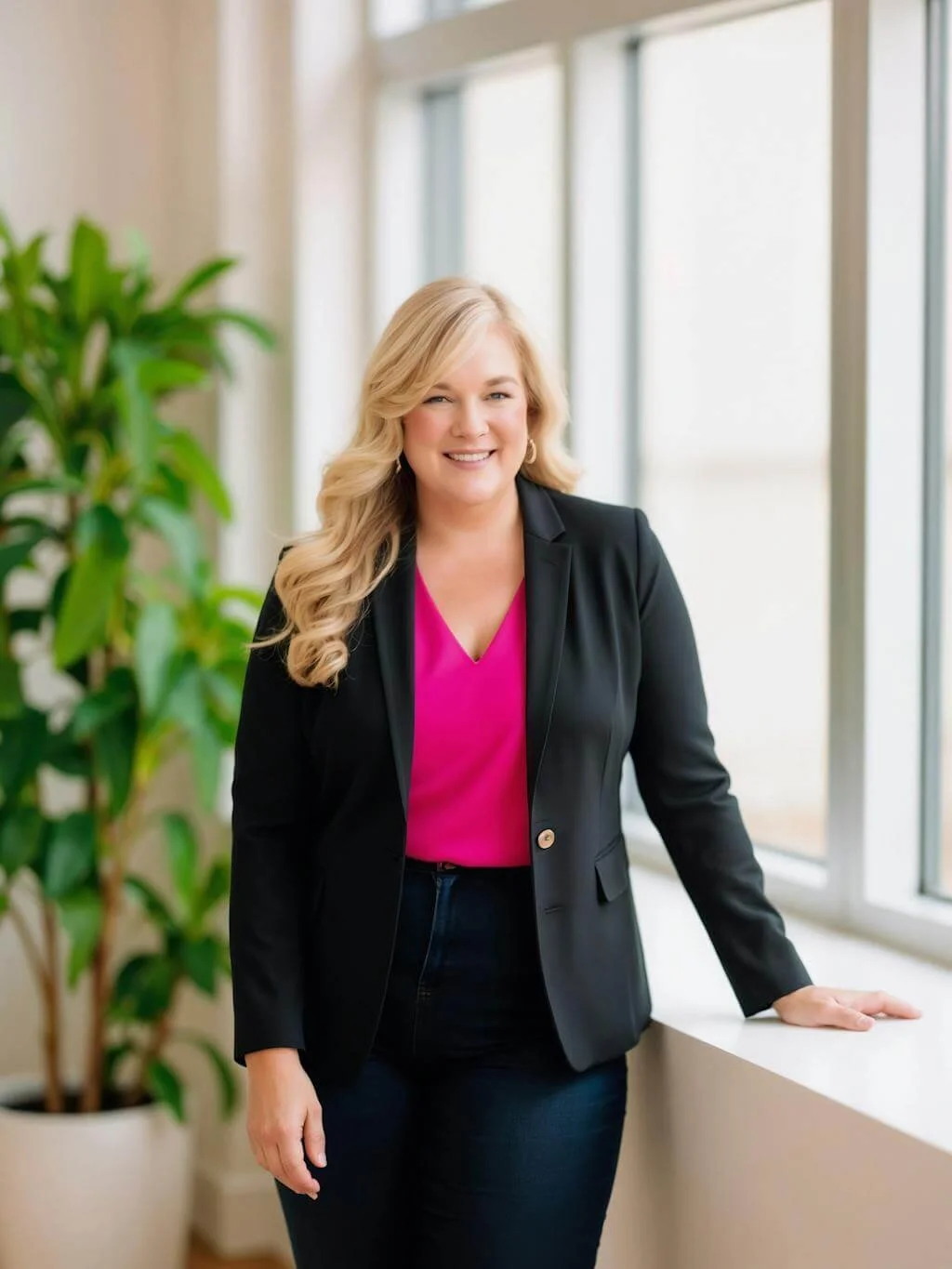
Dr. Destini Copp helps digital product creators build sustainable, systems-based businesses through the Creator Growth Flywheel framework. She's the founder of Creator's MBA and HobbyScool, and has been teaching online business strategy for over a decade. Learn more →