
272: Hot Seat: She Has 13K Subscribers and 40% Open Rates — So Why Aren't They Buying?

What do you do when you have a genuinely engaged email list, great open rates, solid click-throughs, and your subscribers still won't buy?
That's exactly what Allie from Allie Scraps was dealing with. Thirteen thousand subscribers, open rates over 40%, and click-through rates of 3 to 5%. Those are healthy numbers by any measure. But she'd accidentally trained her audience to expect freebies, her price points were low, and the list wasn't converting. She sent me her questions, and I asked her to come on and work through them live.
In this episode
- Why the freebie trap happens, and the mindset shift that breaks the cycle
- The Mini Magazine Method for structuring a newsletter into three to five consistent sections, so you always have something to send
- Why you start with your promo calendar rather than your content
- The Teach and Pitch Method, and how to build a reader journey that leads to a purchase
- What actually works for monetizing a B2C list, including sponsorships, affiliates, and memberships
- How to segment a list into audience personas, and the AI setup that writes each segment's newsletter for you
"I have a semi-large list, 13,000, and they're pretty engaged. But I have trained them to expect freebies a lot. I'd love to train them to purchase more. Any suggestions on how to get them to click on things to purchase, not just freebies?"
Allie, Allie Scraps
"Start with your promotional calendar, not your content. A common mistake is starting with content and making promotion an afterthought."
Dr. Destini CoppAbout today's guest.
Allie is the founder of Allie Scraps, a digital shop and creative community for scrapbooking, mixed media, and Bible journaling. She creates digital downloads, small classes, and curated resources for crafters at every level, and she's presented at several HobbyScool summits.
Her free gift for listeners is a four-page crafty planner, which works just as well for planning any project, creative or not.
Resources mentioned.
- Newsletter Profit Club, where the Mini Magazine Method, the Teach and Pitch Method, the sponsorship resources, and the AI newsletter automation all live
- Creator's MBA Mastermind, for digital product creators ready to build and grow
- The Creator Business Scorecard, a free diagnostic for your creator business
- Kit, the email platform both Allie and I use
- Skool, the community platform we talk about as a membership option for the crafting space
If you want to know which stage of your flywheel is holding your revenue back, start here.
Take the free scorecard →Episode transcript.
00:00Destini: Hi there, I'm Destini Copp, and welcome back to the Creator's MBA Show. Today's episode is a little bit different. I got a message from Allie. She runs Allie Scraps, a scrapbooking, digital downloads, and Bible journaling shop, and she submitted some questions for the show. When I read them, I knew I had to get her on here live, because the things she's dealing with, I know a lot of people out there can relate. She's got a list of about 13,000 subscribers, 40-plus percent open rates, and solid click-through rates. By the numbers, she has a healthy, engaged email list. But here's the problem, she has accidentally trained them to expect freebies, her price points are low, and she's struggling to get them to actually buy.
Destini: Does this sound familiar? In this hot seat, I'll dig into exactly how to fix this: the Mini Magazine Method for newsletters, the Teach and Pitch framework, and how to use your promo calendar to drive your content instead of the other way around. And also how to start thinking about other ways to monetize your newsletter, like sponsorships, and maybe even a membership when the time is right. This is a real conversation with a real online business owner, and I am telling you, the takeaways are solid gold. Let's get right into it.
02:00Destini: All right, so today we're doing something a little bit different. I have Allie, who submitted questions for the podcast. When I read them, I was like, "Allie, I would love for you to come on the podcast and for us just to have a conversation about these." So she graciously agreed to do a hot seat here. When I read her questions, I thought, a hundred percent, everybody listening to this would be able to relate. So I'm going to jump right in and read what Allie submitted, just to set the stage. Here's what Allie said:
Destini: "Here's what I need help with, consistency. I need to do better at sending weekly emails, but sometimes I feel like I'm repeating myself because people have been on my list for a long time. I don't want to get boring, but I also don't always have new things to share." And then she went on to say: "I have a semi-large list, 13,000." I would say that's a very good-sized list and they're pretty engaged. "I have 40% plus open rates and three to five percent click-through rates consistently." I love those numbers. I would agree, you definitely have an engaged list there. "But I have trained them to expect freebies a lot. I'd love to train them to purchase more. Any suggestions on how to get them to click on things to purchase, not just freebies?"
Destini: Okay, Allie, we are going to dig into all of this, and I definitely have some thoughts. But before I get into that, do you want to add anything and give the audience a little more context on you, your business, and what you're doing?
04:00Allie: Absolutely. And first of all, I like that you said I was "gracious enough" to be on the podcast, when I was just so excited that you were willing to answer my questions. I was like, heck yes, sign me up. But like you said, I'm Allie and I own Allie Scraps, which is a scrapbooking, digital scrapping, physical scrapbooking, mixed media, and Bible journaling shop. I mainly do digital downloads and small classes. And this might be part of my problem, my most expensive product is $125, and that's a vault that includes everything I have. A lot of my products are in the range of five to $25.
Allie: So my audience has come to expect the smaller-dollar things. They will click on the freebies, I use Kit, and everything is set up with tripwires. But even my tripwires are five, six, or $12. They are not expensive tripwires, and I've just trained them. They know there's a freebie and they know there's a tripwire after it, but they don't always click and convert. My tripwires convert around three to five percent sometimes, especially on new ones. But I would love to get that higher.
Allie: I do love spoiling my audience with freebies, and I try to be intentional about what the freebies are and what they lead to, that they're connected and relevant. But I would really like to utilize my list to actually grow my business monetarily, not just through freebies and summits. So any advice you have would be great.
06:00Destini: Okay, great. Thanks for that additional context. That definitely helps me figure out how I'm going to frame this. So I'm going to go back to the first question you sent me and then we'll expand from there. The first question was about consistency. I think a lot of people listening feel the same way. They know at a minimum they need to be sending out once a week. If you can do more, I highly recommend it, but I always recommend starting with once a week. That's what I did. Once I got really good with that, I added more editions to my newsletter. So start with once a week.
Destini: But what you said was that you feel like you're repeating yourself because people have been on your list a long time. You don't want to get bored, you don't want them to get bored, and you don't have new things to share. So I want to go back to the research study I did on newsletters. This is where I typically start with people. These are the basics.
Destini: When I did that research study, I realized that all of us in the creator space, digital product creators, course creators, membership owners, we weren't doing our weekly newsletters the right way. Just to set the stage: we're talking about that weekly newsletter you send out. If you're doing a launch, like for a webinar or a signature product, that's a different strategy. Those are sales emails. Right now we're talking about your newsletter email.
Destini: What I found is that newsletter businesses were doing things a lot differently. A lot of them came from journalism backgrounds, so they were thinking about it differently. The way they set up their newsletters is what I call the Mini Magazine Method. When you think about, and I'm going to date myself here, but when I was in high school, I was really into Cosmopolitan or Glamour. Can you relate to that?
08:00Allie: Oh, 100%. And it's so funny you say that, because for the first half of college, I was actually a journalism major. I have a graphic design degree, but it's funny, I should have that journalism mindset, but I don't, because in my mind it's separate from the crafting. If that makes any sense.
Destini: If you have that journalism background, this is going to be so easy for you. I actually have a friend in our mastermind who was a journalist, and I think her emails are some of the best out there. She's much better at it than I am. This is really going to click for you.
Destini: Setting up your newsletter so that you're looking at it differently, it's going to be more like a mini magazine. You'll have different sections. For most people, I recommend three to five sections. With five sections, you have a little more to play around with. You might not use every section in every newsletter. If you have an event to promote, one section might cover the event. If you don't have an event that week, leave it out. But you generally want three to five consistent sections that people get used to seeing.
Destini: Those sections are going to help you solve what you mentioned, "I don't want to get boring, but I don't always have new things to share." When you have different sections, you're going to be able to mix and match things. It'll be much easier to come up with content. You might put a slightly different spin on a blog post you've promoted before, maybe leading into a tripwire, with a new angle on it.
Destini: So you'll have those three to five sections. When figuring out what to put in each one, I always tell people to start with their promotional calendar, which is different from what a lot of people do. A common mistake is starting with content and making promotion an afterthought.
Destini: But when you think, "This week I'm promoting the vault," since you mentioned you have a vault at $125, if that's your main focus this week, then your content in those mini magazine sections is going to point toward that vault. Let's say one section is a blog post. That blog post promotes the vault and takes people on a journey toward it.
Destini: I have what I call the Teach and Pitch Method inside Newsletter Profit Club. You're going to teach them a little bit, and then you're going to be very specific about that reader journey, pitching whatever the next step is, the call to action, and guiding them toward purchasing your vault. Not everybody is going to buy, but you're being very strategic about that reader journey. And that's how you train them to purchase from you rather than just expecting freebies all the time.
Destini: With your open rates, 40-plus percent, and three to five percent click-through rates, you can really start monetizing that newsletter. There are other ways to monetize too, which we can get into. With 13,000 people, there are lots of options. But your own products will be one of the best margin opportunities you have.
13:00Allie: Absolutely. That's something I've been trying to explore over the last couple of weeks. I mentioned before we started that I've presented at a couple of HobbyScool summits. When I finally sat down and said "I'm going to write a newsletter," I wasn't surprised by your magazine advice, I've listened to a lot of your podcasts, so I knew that's what you were going to say.
Allie: So I did sections, events, and a couple of freebies I didn't even have to create fresh, just existing ones. And I was really proud of myself because just mentioning some of those things, there was a HobbyScool summit I wasn't even presenting at, and I think I got at least five all-access pass sales from it, which was very exciting.
Allie: There was also a bundle I was in that had a contest, and I don't want to brag, but I blew the contest out of the water and won every single category, even for upgrades and free opt-ins. I only mentioned it once, and those were either free or low-cost, but people upgraded from those.
Allie: I know I've trained them to click even on freebies, and I can use that to my benefit, like promoting affiliate stuff. I think part of it is getting out of my own head about only promoting when I have something new and shiny. It can be "Hey, I discovered this product and it's really cool, I want to tell you about it." And that can be a magazine section.
15:00Destini: Absolutely. Each section of your mini magazine newsletter can promote different things. I like it to be somewhat cohesive, you don't want everything disjointed, but you can promote an event and earn affiliate income from it, or promote one of your products and take people on a journey there. There's a lot of opportunity. The other thing I'd love for you to do with a list of 13,000 is start doing sponsorships.
Allie: Yes, and the universe has been telling me that, because I've heard four different people talk about newsletter sponsorships. I've turned it on in Kit so I'm open for it. I haven't gotten anything yet, but it's only been two weeks, so I'm not nervous yet. I do have it on my list to reach out to people directly, like, "Hey, you don't have to go through Kit, but would you like to sponsor my newsletter?" I also do promotion swaps, but those are usually tied to affiliate income or solo emails. Do you have any advice on how to seek out sponsorships?
16:00Destini: Sure. And just so you know, I know you said you're planning to join Newsletter Profit Club in the fall once your youngest starts kindergarten, which is always exciting. I have a current third grader, and soon it'll be a fourth grader and a kindergartner, both out of the house, and I can focus on work all day.
Destini: Inside Newsletter Profit Club, I have a lot of resources on setting up your sponsorship page and the strategy behind it. But honestly, some of your best potential sponsors would be HobbyScool speakers, they're already connected to that world. I would personally be interested in sponsoring your newsletter because it's an audience I want to get in front of.
Destini: So a lot of this comes down to networking. There are platforms out there, but many of them are B2B-oriented. For HobbyScool, the audience is B2C, so you won't get as much traction on those platforms. It's a different story for Creator's MBA, where there's clear B2B interest.
17:00Allie: That's something I've noticed too. I've been in coaching groups and everyone has a B2B mindset and audience, and I'm very much B2C. I was so excited when I saw you get into HobbyScool, because I thought, yes, someone with that business and marketing mindset who can share wisdom about the B2C world. Because it really is different. You can't do a webinar and expect someone to commit to a $2,000 program in a B2C world the way you can in B2B.
18:00Destini: It is definitely a different mindset. And since you mentioned it earlier, I'm going to go here if that's okay. I think maybe one of your issues is your offers. Maybe you don't have high enough price points. In a B2C world, especially in the crafting space, it would be difficult to sell a $2,000 offer. But I do feel like memberships do really well in B2C. It's a hot market, especially when you're building community and generating recurring revenue. I won't pretend it's easy, we've had our challenges with the Craft & Create Club at HobbyScool, but it can be lucrative if you're willing to invest the time, energy, and effort to get it going.
19:00Allie: And having a toddler has been my limiting factor. He's very well-behaved and smart, but two boys take a lot of energy. I've had several membership ideas. It's not a shortage of ideas, it's the time, energy, and effort to execute consistently. Consistency is my issue with my newsletter, so why would I sign myself up for something harder? I just haven't narrowed it down to which idea to move forward with. Can you refresh my memory on the Craft & Create Club, what does it cost per month?
Destini: It's $7 a month, but we really push people toward the annual or lifetime option.
20:00Allie: I really like that you offer monthly, annual, and lifetime. I'm guilty of it too, I don't love signing up for monthly recurring charges because I'll forget about them. I have ADHD, and it doesn't exist until the bill shows up. But I will always opt for a lifetime membership because I go in phases. I'd love to spend all summer on crafting, but then soccer and swim season hit and things slow down. So I like that the lifetime option exists, especially in the crafting industry, not everyone thinks about that.
21:00Destini: The other thing I'd say, and we don't have our membership on Skool, but if you're really wanting to build a community with a membership option, I think Skool has made it easy for a lot of people in the crafting space. That might be worth considering if you go down that path.
22:00Allie: Skool keeps coming up in all my research right now. Four or five different summits this month have used Skool as their platform. I'm pretty tech-savvy, so I'm picky about what platforms I use, but I also need to stop overthinking and dive into something that's ready-made.
Destini: I think the benefit is that Skool makes it easy for people in your community to participate and engage, which is the part I really like about it. I'm not a huge fan of some of the other technical aspects, but from the participant standpoint, people love it.
23:00Allie: I agree. I had a feeling you were going to say something about a membership once we started talking price points. It's definitely something I've thought about, I just haven't narrowed it down. Crafting and scrapbooking is my overall niche, but then I niche down with mixed media, and further still with Bible journaling. My faith audience often sees what I do for mixed media and likes it, but my mixed media audience isn't always interested in the faith content. So segmenting is definitely something I need to do better. But I also have ADHD, and I'm always like a firehose of information, I just want everyone to know everything and ignore what they don't want. I know that's not always the best marketing approach.
Destini: In your Kit account, do you have everyone segmented?
24:00Allie: I haven't started yet. I've been working with ChatGPT and Claude to build audience personas. I have three pretty solid personas: memory keepers, planners, and a faith audience. Right now everyone's grouped together, so I'm trying to go back and re-segment. Moving forward I want to segment into those three groups. But I haven't been consistent enough to send separate emails to each segment. Most of what I've sent lately is relevant to everyone, so I don't want to send three different weekly newsletters, but I do want to speak to each segment for things like a new class or a summit that's only relevant to one audience. So yes, in my brain I've got it figured out. In practice? Not fully yet.
25:00Destini: I'm going to throw something out there, and this is more of a future thing, not something you have to do right now. Once you get everyone segmented through tags in Kit, there is a way to set up a skill for each of those segments or newsletters so that sending is basically done for you. We covered that recently in Newsletter Profit Club, setting up the AI automation lab for your newsletter. You can set up those skills so the newsletters write themselves every single week, and you can target each segment and send separate emails.
26:00Allie: That's really cool. And that's actually what I've been diving into with AI lately, just dumping everything: transcripts, blog posts, product info, and saying "Hey, pull from this and tell me what I should share for this audience." I'm terrible at narrowing it down because I have such a deep back catalog of products and posts, and deciding what's most appropriate to share right now is always hard.
Destini: So here's how it works at a high level. The automation is set up to first pull from wherever you store your promo calendar: Google Docs, Notion, Airtable, wherever. It grabs what you're promoting that week and the content theme, then it goes out to your website and pulls blog content related to what you're promoting. And when I say it's automated, I mean it will write the email for you in HTML, fully formatted to your mini magazine sections, all nice and pretty. You copy the HTML, paste it into Kit, add the subject line and preview text, and you're done. Bam.
27:00Allie: That's awesome. Who do you use, by the way?
Destini: I use Kit. So I just copy and paste the HTML into the broadcast email. The only things I add are the subject line and preview text. And done.
Allie: Yeah, I need to just do it. A lot of this is coming together all at once, and I know what I need to do. It's just about organizing it now.
Destini: And that's why I love using AI for that kind of organization and clarity. Allie, any last-minute questions before we wrap up?
Allie: My brain is spinning, so I probably have a million questions, but none are coming to mind right now.
Destini: I'll send you the meeting transcript so you have all the notes and don't have to write anything down. Now, before we go, can you let the audience know where they can find you? And I believe you have a free gift for them too.
28:00Allie: I do! I'm the queen of freebies, so I have a crafty planner freebie, four different planning pages. You can use them to plan a crafty project, or honestly just any project. I've been reaching for these constantly over the past six months, so I thought I'd share them. That link is in the show notes. You can also find me at alliescraps.com, and my shop is at shop.alliescraps.com. I'm also on Instagram at Allie Scraps. I post sporadically, but I'm usually scrolling!
Destini: I'll make sure all those links are in the show notes. Allie, thank you so much for this conversation, I had fun!
Allie: Me too! Even with a long to-do list now, this was very fun.
29:00Destini: Thanks for listening all the way to the end. I hope you enjoyed this episode. If you love the show, I'd appreciate a review on Apple Podcasts or your favorite podcast platform. Have a great rest of your day, bye for now!
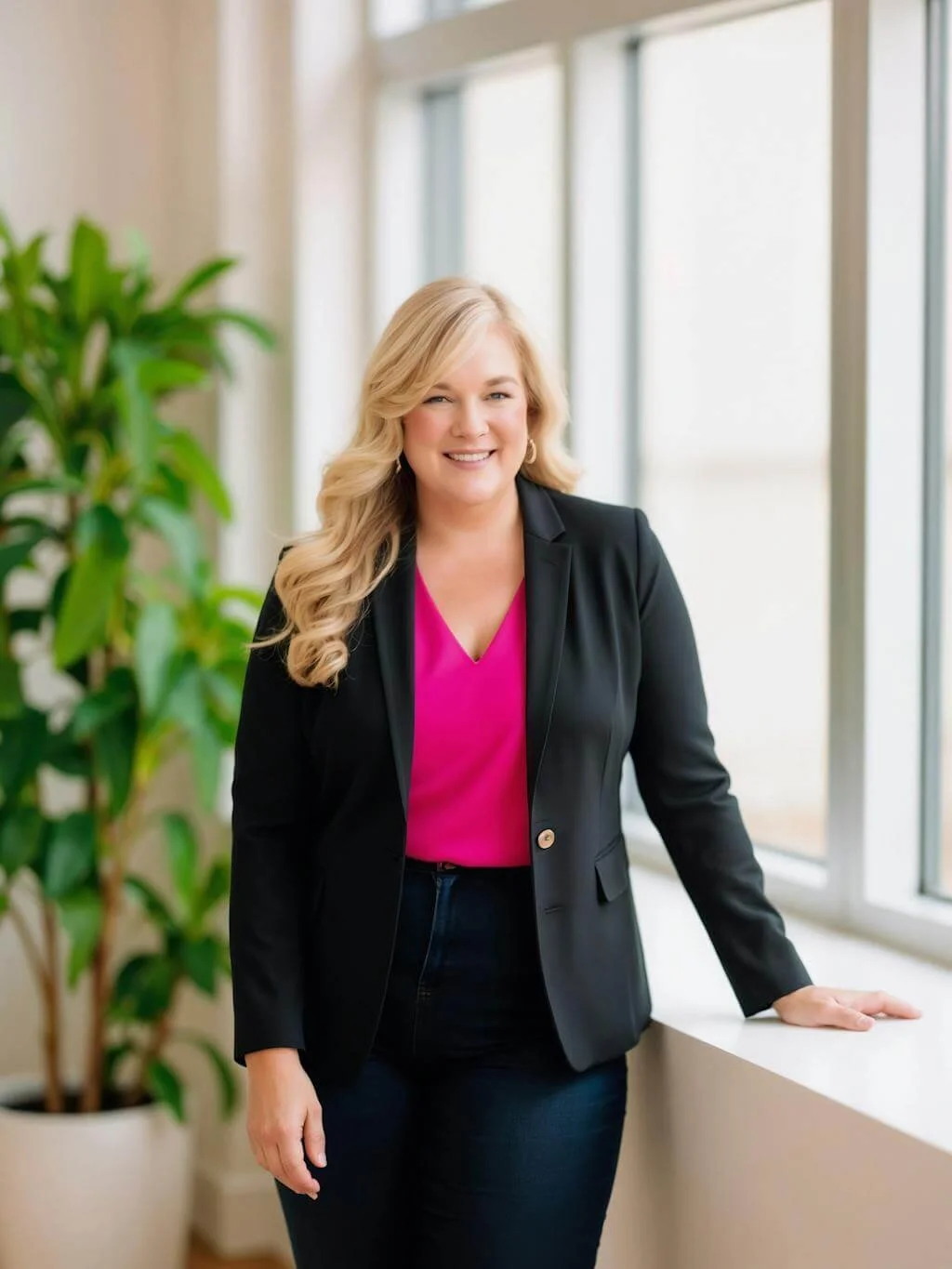
Dr. Destini Copp helps digital product creators build sustainable, systems-based businesses through the Creator Growth Flywheel framework. She's the founder of Creator's MBA and HobbyScool, and has been teaching online business strategy for over a decade. Learn more →
Pin this and save for later
