

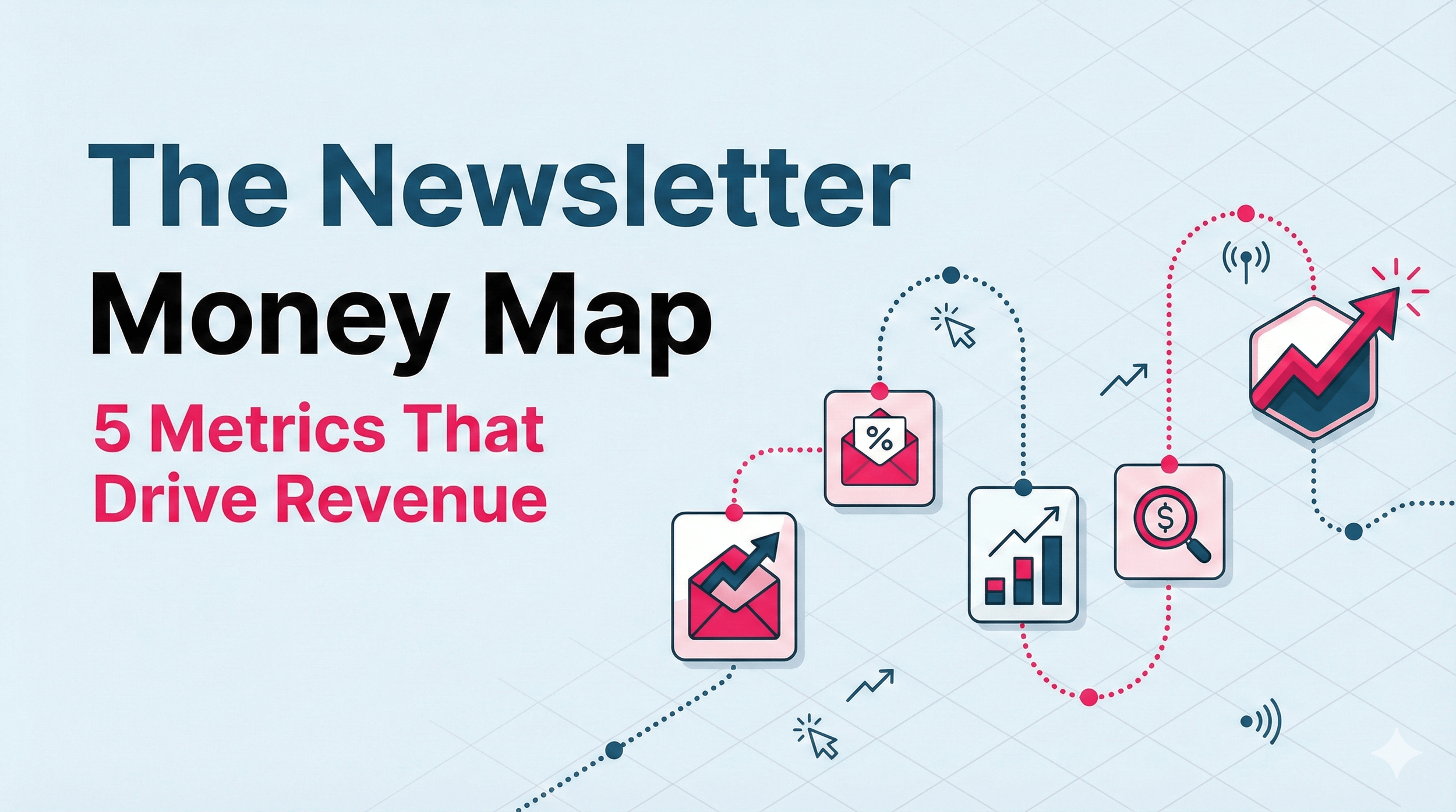
Ever looked at your newsletter stats and thought, “What do these numbers even mean?”... it’s time to change that.
In this episode of the Creator’s MBA podcast, I’m diving into newsletter metrics and showing you how to read them like a CEO. If you’ve ever felt confused by open rates, click-through rates, or why your email list isn’t converting, this is the clarity you’ve been waiting for.
I’m sharing the exact framework I use inside the Newsletter Profit Club to help you see what’s working, what’s not, and what to fix next.
We’ll go beyond the surface numbers and get into the mindset shift that transforms metrics from a source of stress into a strategic tool.
Whether you’re a seasoned email marketer or just starting to grow your list, you’ll walk away with a simple, powerful approach to make your newsletter a true business asset.
🎧 What You’ll Learn
Why open rate is really about recognition and trust (not your subject line)
How click-through rate reveals your content’s “activation power”
The real reason low conversion rates happen—and how to fix it
Why unsubscribes can actually be a good sign
How to track and increase your revenue per reader
The 5-metric “Money Map” framework I use with clients
The order of operations for fixing your email strategy
If your 2026 goals include more engagement, better conversions, or turning your newsletter into a reliable revenue stream, this episode is your roadmap.
Tune in now and if you’re ready to go deeper, join me inside the Newsletter Profit Club workshop where we’ll break it all down with real benchmarks and action steps.
🎧 Listen now and take your newsletter from a weekly experiment to a revenue-generating asset.
Mentioned in this episode:
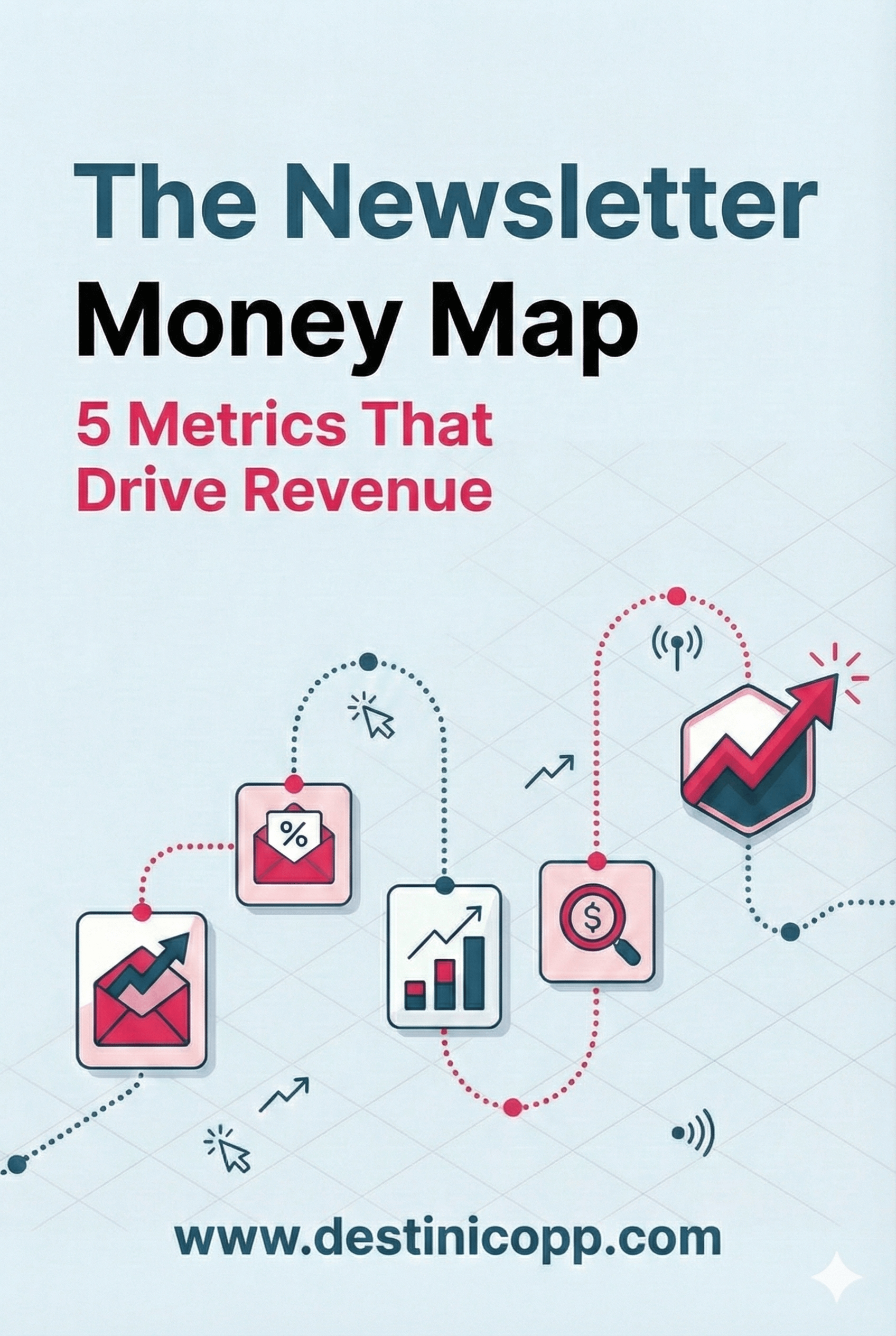
5 Metrics That Drive Revenue
Ever looked at your newsletter stats and thought, “What do these numbers even mean?” You’re not alone—and it’s time to change that.
In this post, I want to walk you through the exact framework I teach inside the Newsletter Profit Club and use in my own business to evaluate what’s working, what’s not, and what to fix first. Because when you understand your newsletter metrics like a CEO, you stop stressing and start making strategic decisions that actually grow your business.
Let’s break down the 5 newsletter metrics that matter most—and how they work together to turn your email list into a reliable source of revenue.
1. Open Rate: Do People Recognize and Trust Your Brand?
So many people obsess over subject lines, thinking they’re the key to higher open rates. But here’s the truth: open rate isn’t a reflection of how clever your headline is—it’s a reflection of your relationship with your audience.
A healthy open rate usually means your subscribers remember you. They trust you. They see your name in their inbox and think, “Oh good, it’s her!”
If your open rate is low, it’s often because of two things:
You’re not emailing consistently enough
Or your subscribers never really connected with you in the first place
The fix? Show up consistently. Build recognition. Be someone they expect to hear from—not someone they forget about until your next promo.
2. Click-Through Rate: Are Your Readers Taking Action?
Your click-through rate is what I like to call your reader activation rate. It answers the question: is your content compelling enough for your readers to take action?
If people open your emails but never click, that’s a red flag. It usually means your content is passive, unclear, or not guiding them toward a next step.
Every email should have a purpose—even if it’s not selling. Invite your audience to read a blog post, sign up for a freebie, or hit reply and share a thought. The goal is to activate your reader and build momentum toward your offer.
3. Conversion Rate: Does Your Offer Match Their Needs?
Here’s where most people panic: “They clicked, but no one bought—what’s wrong with me?” Deep breath. This isn’t a personality test—it’s a feedback loop.
A low conversion rate usually isn’t a traffic problem. It’s an alignment problem.
Ask yourself:
Does this offer solve a real problem they already know they have?
Is the messaging clear and confident?
Am I making it easy for them to say yes?
If your offer is out of sync with your list, getting more subscribers won’t help. Fix the alignment first, then scale.
4. Unsubscribe Rate: Am I Losing the Right People?
Unsubscribes make a lot of people cringe, but I want you to think of them differently: they’re not rejections—they’re refinements.
When your message is clear and your positioning is strong, the right people will stay and the wrong people will opt out. That’s exactly what you want.
The only time to worry is if you see a sudden spike in unsubscribes. That’s usually a sign that something shifted—your tone, your topic, or your pitch—and it caught people off guard. Don’t panic. Just pause and reassess.
5. Revenue Per Reader: Is Your Newsletter a Business Asset?
This is my favorite metric—because it answers the real question: Is your newsletter pulling its weight in your business?
Most people never look at this, but it’s critical for long-term sustainability. Revenue per reader tells you whether the time, energy, and list-building you’re doing are actually turning into income.
If it’s low, don’t assume you need more subscribers. It usually means your monetization strategy needs work. Fix the funnel before you scale the audience.
What to Fix First (My Order of Operations)
Feeling a little overwhelmed? Don’t worry—I’ve got a simple roadmap:
Fix your consistency. If people don’t expect to hear from you, nothing else matters.
Fix your calls to action. Tell readers what to do next—and make it clear.
Fix alignment between your content and your offers. Your emails should naturally lead to what you sell.
Fix reader retention. Keeping someone engaged for 90 days is more valuable than adding a hundred cold subscribers.
Track revenue per reader. This shows whether your email list is truly working for your business.
Ready to Dive Deeper?
If you’re thinking, “Okay Destini, I finally get it—now I want to look at my numbers and make a plan,” that’s exactly what we’re doing inside this month’s Newsletter Profit Club workshop.
We’ll walk through how to calculate each metric, what benchmarks look like for small and mid-size lists, and how to increase your newsletter revenue over the next 30 days.
Whether your 2026 goal is more engagement, better conversions, or turning your newsletter into a consistent revenue stream, this framework is your first step.
Join us live or grab the replay—either way, I’ll help you turn your newsletter into the business asset it was always meant to be.
Pin this and save for later
Transcript:
[00:00:00] Welcome to the Creator's MBA podcast, your go-to resource for mastering the art and science of digital product entrepreneurship. My name is Dr. Destini Copp and I help business owners generate consistent revenue from their digital product business without the need to be glued to their desk, constantly live launching, or worrying about social media algorithms.
[00:00:45] Hi there, Destini here, and welcome back to the Creator's MBA podcast. I'm super excited that you're joining me today because we're talking about newsletter metrics. If you've ever opened your email service provider and thought, "What am I even looking at? Is this good? Bad? Terrible? I have no idea," you're not alone. We’re going to cover all of that today.
[00:01:15] A lot of people either avoid their numbers completely or obsess over metrics that don’t actually tell them anything useful. Today, I want to give you something different: a simple way to look at your newsletter like a CEO, so you can see what’s working, what’s not, and what to fix next.
[00:01:45] This is the same framework I use inside the Newsletter Profit Club and in this month's workshop. Even just with this episode, you'll walk away with more clarity than most business owners ever get.
[00:02:10] First, a mindset shift: Your metrics are not a grade on your creativity. They’re not a judgment on your newsletter or a personality test for you as a business owner. Metrics have one job: to answer the question — is your system working?
[00:02:45] Every number is just a signal. It answers questions like: Do people recognize your brand in their inbox? Are they connecting with your content? Is your newsletter helping bring in revenue?
[00:03:15] Once you start viewing your stats this way, your anxiety drops, you stop judging yourself, and you start using your numbers to make decisions. That’s what we want.
[00:03:30] Let’s talk about the framework I use. I call it your Newsletter Money Map. You don’t need 20 different charts. You need just five core metrics. Each one answers a specific strategic question.
[00:03:50] Number one: Open Rate. This answers the question, "Do people recognize and trust my brand?" Open rate isn’t about how brilliant your writing is. It’s a measure of recognition and relationship.
[00:04:20] A healthy open rate means people know who you are, remember why they signed up, and are expecting to hear from you. If your open rates are low, it usually means one of two things: you’re emailing inconsistently, or people never really connected with you in the first place.
[00:04:50] That’s why consistency matters. When readers trust you, they open. Subject lines help, but they’re not the main reason people open your emails.
[00:05:05] Number two: Click-Through Rate. This answers the question, "Is my content compelling enough to act on?" This is really the heartbeat of your newsletter.
[00:05:30] If people are opening but not clicking, it might mean your content is passive, or you’re not offering a clear next step. You need a reader journey.
[00:05:50] Your job isn’t just to send something interesting — it’s to activate your reader. Invite them to take the next step. That could be reading a blog post, signing up for something, or responding to you.
[00:06:15] A healthy click rate means your ideas are landing, your CTAs are clear, and you're training your audience to engage with you regularly. Think of your click-through rate as your "reader activation rate."
[00:06:40] Number three: Conversion Rate. This answers the question, "Do my offers match the needs of my audience?" We’re looking at clicks that actually turn into purchases or signups.
[00:07:05] If people are clicking but not buying, it’s not that your list hates you. It’s usually not even a traffic problem — it’s an alignment problem.
[00:07:20] Conversions tell you: Does this offer make sense? Does it solve a real problem? Is the pitch clear and specific? Many business owners think they need more subscribers, but if your offer is off, more subscribers won’t help.
[00:07:50] So instead of asking how to get more people, ask: How do I tune this offer and message so it’s a no-brainer for the people I already have?
[00:08:05] Number four: Unsubscribe Rate. The question here is, "Am I losing people, or filtering them correctly?" This one makes people cringe, but unsubscribes can be healthy if they’re stable and predictable.
[00:08:30] Stable unsubscribes mean your message is clear, your positioning is strong, and those who aren’t a fit are opting out — which is good. The people who stay are more aligned.
[00:08:50] The only time to really pay attention is if you see a sudden spike in unsubscribes. That’s a signal something shifted — maybe your topic, tone, or the offer didn’t match expectations.
[00:09:15] That’s not a crisis — it’s just an invitation to review and see if expectations got out of sync.
[00:09:25] Number five: Revenue Per Reader. This answers the question, "Is my newsletter a business asset?" Most people never track this — but you will.
[00:09:45] This metric shows you whether your newsletter is actually pulling its weight. Is your effort translating to revenue? Is your monetization strategy working?
[00:10:10] If your list is growing but not converting, this tells you that something’s off. This is the sustainability metric — not just how it’s performing today, but whether it can support your future business goals.
[00:10:35] In the Newsletter Profit Club workshop, we go deeper into this: how to calculate it, benchmarks, and what to do if your revenue per reader is low.
[00:10:50] So now that you know what each metric is telling you, here’s the next question: What do I fix first? Let me give you a simple order of operations.
[00:11:00] Step one: Fix consistency. If your audience doesn’t expect to hear from you, nothing else matters.
[00:11:15] Step two: Fix your calls to action. You need to clearly invite people to take a step — not always to buy, but to engage.
[00:11:30] Step three: Fix alignment between your content and your offers. Your newsletter should naturally lead into your products or services.
[00:11:45] Step four: Fix reader retention. Keeping an engaged reader is more valuable than collecting subscribers who don’t engage.
[00:12:00] When you work through your metrics in this order, you’ll stop randomly trying all the things and start running your newsletter like a real business asset — not a weekly experiment.
[00:12:20] If you’re thinking, “Okay Destini, I get it — now I want to look at my numbers and make a plan,” that’s exactly what we’re doing inside this month’s Newsletter Profit Club workshop.
[00:12:35] We’ll walk through how to calculate each metric, what benchmarks look like for small and mid-size lists, and how to increase your newsletter revenue over the next 30 days.
[00:12:50] You can join us live or watch the replay. Just head to the Newsletter Profit Club — I’ll drop the link in the show notes. Let’s make your newsletter a real asset for your business in the coming year.
[00:13:10] Thanks for listening all the way to the end. If you loved the show, I’d appreciate a review on Apple Podcasts or your favorite platform. Have a great day!