
I Audited My 21 Lead Magnets. Here's What I Changed.
If you have been running your business for a while, you probably have more lead magnets than you think. A checklist here. A guide you put together for a launch two years ago. A quiz you set up once and then forgot about. They are spread across your landing pages and your email tool, and most days you are not really sure which ones are still doing anything for you.
That was me a few weeks ago, so I decided to stop guessing and actually find out what I had. I asked AI to go through both of my brands and pull every lead magnet from my landing pages and my email sequences into one list. When that list came back, there were 21 of them.
Twenty-one. Built at different times, for different offers, by a version of my business that does not really exist anymore.
The freebies were not the problem
The lead magnets were not bad. A lot of them were genuinely useful, and people were still downloading them. The problem was that they were dated, and the customer journey from the freebie to anything I actually sell was not clear anymore. Someone would grab a guide, get a thank you page, and then land in nothing, with no clear next step and no reason to keep going with me.
The freebie did its first job, which is to get someone onto my email list, and then it stopped. It pointed at an offer I had already retired, or it pointed at nothing at all.
If your list keeps growing but you are not making more sales, this is usually why. You are bringing people in the front door and then leaving them standing in the hallway.
A lead magnet is the start of a journey, not the whole thing
Think about what a lead magnet is actually for. In my Creator Growth Flywheel, the first stage is Attract, which is simply the work of helping new people find you. A lead magnet is an Attract tool, the handshake at the door.
But a handshake is only the beginning. The whole point of meeting someone is what comes after it, the conversation, the trust, the reason they decide to stick around. A lead magnet that ends at the download is a handshake with nobody on the other side of it. The job is not just to get the email address. The job is to walk that person toward something you sell, in a way that feels helpful instead of pushy.
So when I looked at my 21, I stopped asking "is this a good freebie?" That was the wrong question. I started asking "where does this freebie lead, and is this the right customer journey?"
The three questions I ran on every lead magnet
Once I changed the question, the audit got simple. I put every lead magnet through the same three checks, and you can run these on yours today.
Where does this point?
Name the one offer this freebie should lead to. Not a list of offers. One. If you cannot name it without thinking hard, that is the first thing to fix, because a freebie with no destination is just a giveaway.
Does it actually set that offer up?
Solving the small problem in your freebie should make your paid offer the obvious next step. If your guide teaches one thing and your offer is about something completely different, the bridge between them is broken.
Is the customer journey clear after they download?
Look at what happens right after someone opts in. The thank you page and the first email are where most journeys die. There should be a clear, friendly next step waiting, not silence.
How I am rebuilding them
With the audit done, the rebuild got a lot easier, because I am not starting from a blank page. I am building backwards from the offer.
For each lead magnet worth keeping, I pick the offer it should lead to first. Then I shape the freebie so that finishing it leaves someone ready for that offer. Then I write the bridge, which is the welcome email that connects the free thing to the paid thing using my Teach and Pitch Method, where you teach something genuinely useful and then make a natural offer at the end.
I am also modernizing the formats while I am in there. The format matters less than the customer journey, but a fresh format gets opened, and an opened freebie is the only one that does anything at all.
The ones that point at offers I no longer sell are getting retired. There is no reason to keep sending new people down a road that ends at a closed door.
A few of the ones I cut
Not everything made the keep pile. Some of these freebies were tied to offers I do not run anymore, and a few were just old. Here are the honest examples, since the cutting is the part nobody likes to show.
The freebies that fed HelloContent
I closed HelloContent in June, and the moment I did, every lead magnet that pointed into it became a road to a door I had locked myself. A new subscriber would download something useful, get warmed up, and then get sent toward a product that no longer existed. Those came down first. It was an easy call once I could see them all in one place, still bringing people in and walking them straight into a wall.
A stack of launch-era PDFs
I also found a pile of PDF checklists and guides I had made for launches that ended years ago. A handful were genuinely good, so those are getting rebuilt. The rest I let go. A good PDF that points nowhere is still a dead end. It is just a nicer looking one.
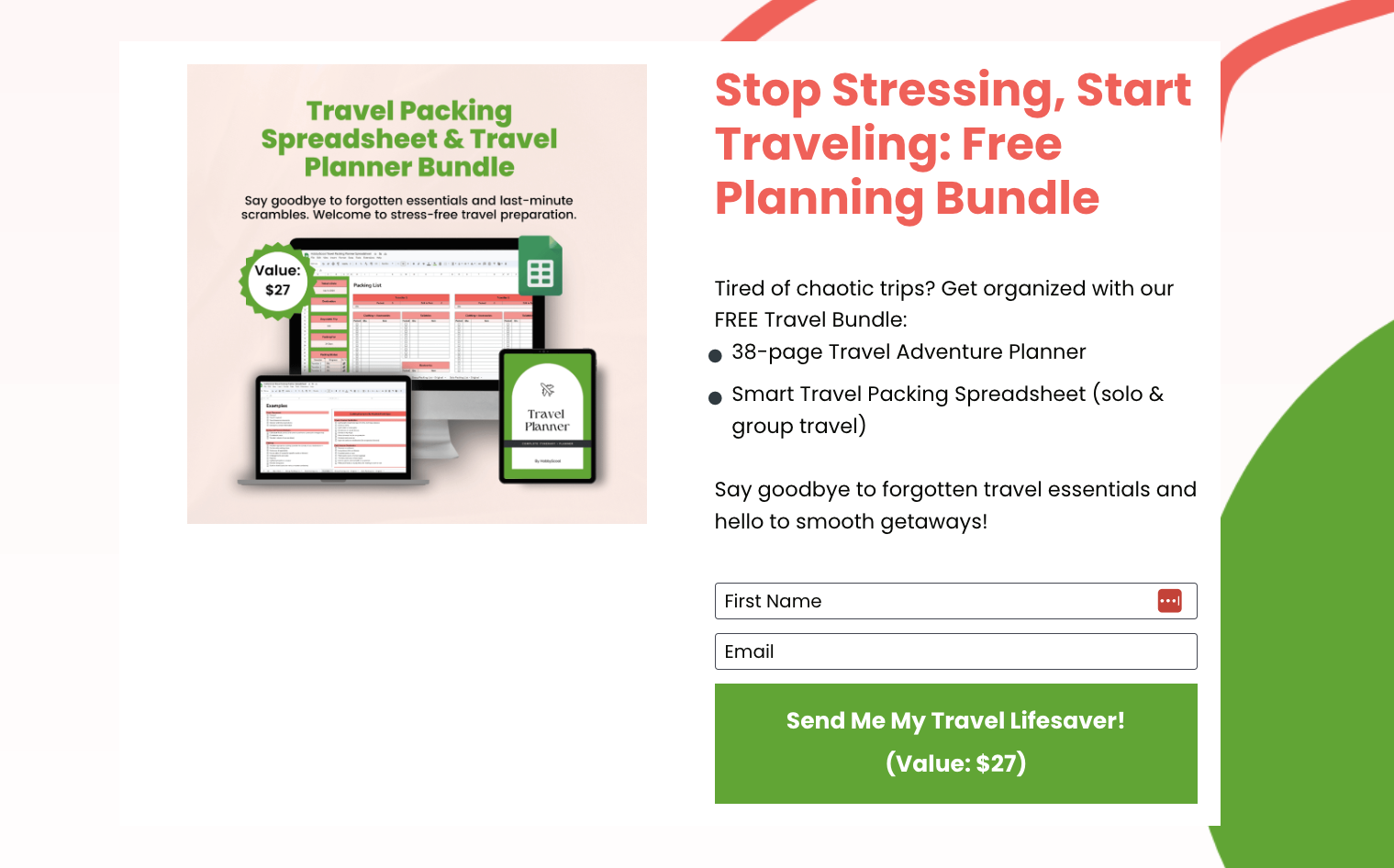
The HobbyScool travel packing spreadsheet
I ran this same process in my other brand, HobbyScool, and the travel packing spreadsheet was one of the first to go. People liked it, but HobbyScool is built around online learning and our monthly virtual summits now. A packing list does not lead anyone toward that. It was bringing in subscribers who wanted travel tips instead of creative workshops, so it came down.
A couple I rebuilt from the ground up
These are the ones I kept and reworked. In every case I started with the offer and built the customer journey backwards from there, so each freebie hands someone to the right next step instead of leaving them to figure it out alone.
The Newsletter Profit Calculator
This is my favorite example, because it shows the whole idea in one freebie. The calculator helps you see what your newsletter could actually earn. The first version was a Google Sheet. It worked, but a spreadsheet asks people to make their own copy, dig around, and figure it out alone, and most never did. So I rebuilt it as an interactive tool on Lovable, where you type in your numbers and get your answer right there on the screen.
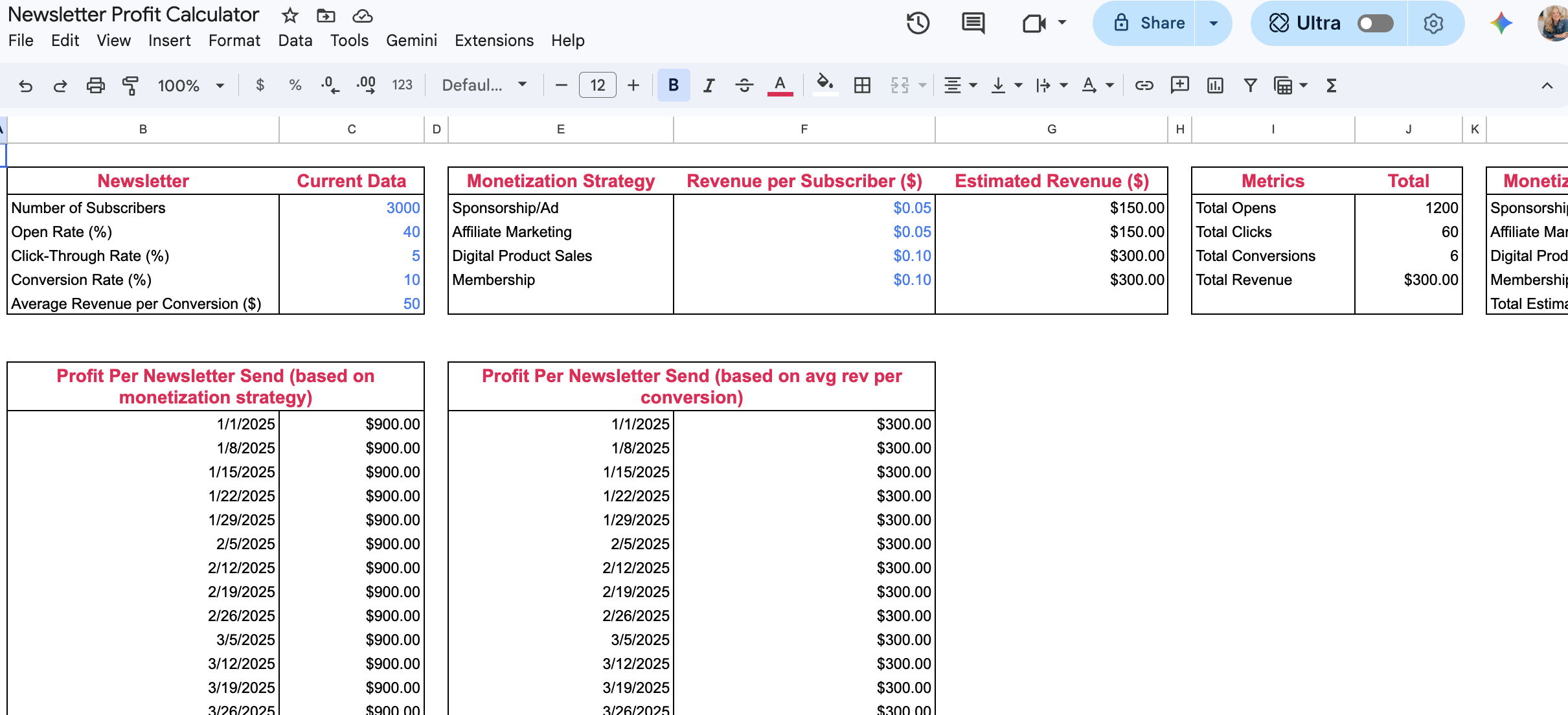

Then I built the customer journey out from it. After someone runs their number, the next step is the Mini Magazine Method for $37, which shows them how to structure a newsletter people want to read. From there, a $17 add-on on subject lines for the people who want it. And the whole thing leads toward Newsletter Profit Club, where they put it all together with me. Every step earns the next one, and nobody hits a wall.
HobbyScool, cut all the way down to one
In HobbyScool I went further than trimming. I cut all the way down to a single lead magnet. There is now one freebie, the Creative Escape bundle, and one landing page that hands it over and invites people to join the list so they hear about our monthly events. One clear front door instead of a dozen scattered ones.
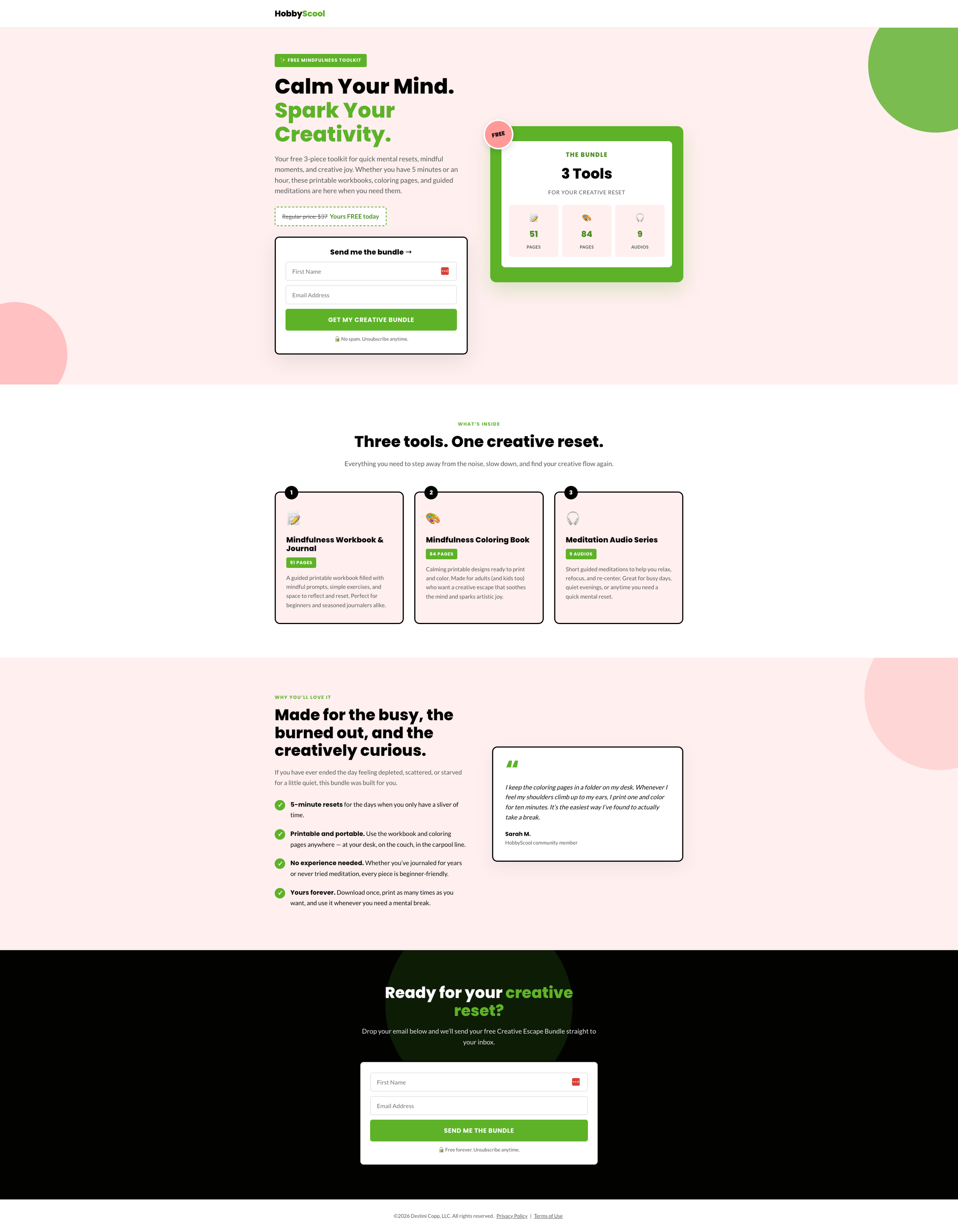
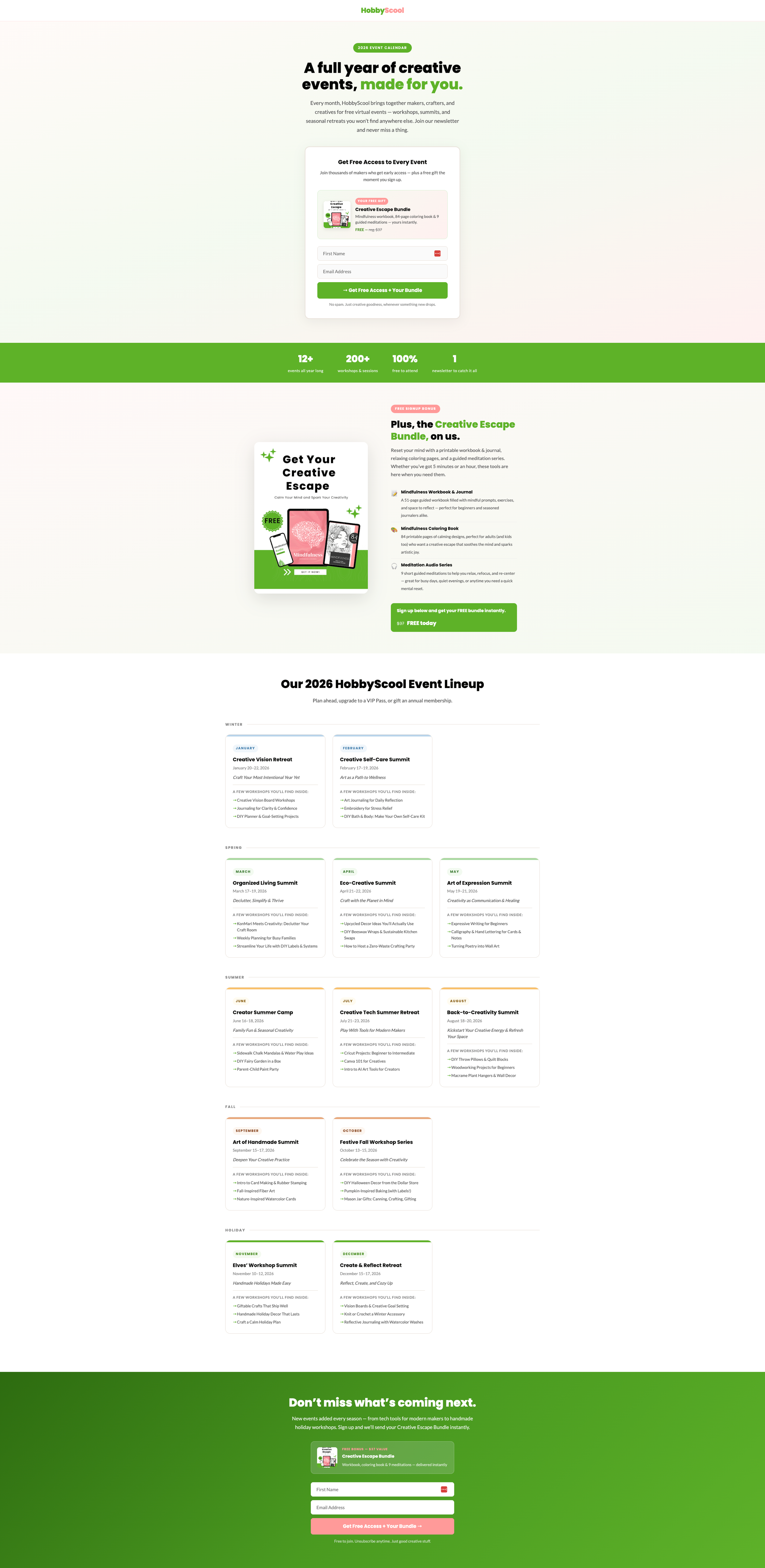
On the combined page, the Creative Escape bundle is the headline feature, and joining the list for event news is the next step right below it. One page does both jobs, and a new subscriber always knows where they are going next.
"A lead magnet that does not connect to an offer is not really a lead magnet. It is a nice thing you gave away for free."
— Dr. Destini Copp, Creator's MBAWhy this one is easy to put off
Auditing your lead magnets is not exciting work, and it never feels urgent, which is exactly why most of us skip it. A freebie that is technically still working does not nag you. It keeps pulling in subscribers, so it looks fine from the outside. The real damage is invisible, because you never meet the person who downloaded your guide, found no next step, and drifted away. You just watch the list grow and assume the rest is working too.
That is the trap. Growth you can see hides a customer journey that is broken where you cannot. The fix is not hard. It is just easy to ignore, because nothing is on fire. But the creators who turn an email list into real income are almost always the ones who have done this exact work.
I taught this live inside the club last month
Last month we ran a Lead Magnet Lab inside Newsletter Profit Club. Members brought their own freebies, and we rebuilt the customer journey for each one together, live. People walked in with a pile of downloads and walked out with a clear customer journey from each freebie to a real offer.
That is the whole idea behind the club. It is not another course to add to your pile. It is the place where you do the work on your own business, with me and a room of other creators who are building the same thing at the same time.
Turn your newsletter into reliable revenue
Newsletter Profit Club is where creators turn an email list into steady income, using the Teach and Pitch Method I run in my own business. Your lead magnets are the front door. Inside the club, we build the whole customer journey behind them, from freebie to subscriber to sale, with live labs like the Lead Magnet Lab I just described.
Join Newsletter Profit Club →Frequently Asked Questions
Look past the download numbers. A lead magnet is working when it brings in the right people and moves them toward something you sell. If your list is growing but those subscribers never buy, your freebie is attracting people and then leaving them with nowhere to go.
Yes. Each freebie should point to one clear offer, and finishing the freebie should make that offer the obvious next step. A lead magnet that connects to nothing just grows your list without growing your income.
Fewer than you think. A handful of strong lead magnets, each with a clear customer journey to an offer, will do more than 20 scattered ones. I would rather have three that lead somewhere than twenty that dead-end.
Start with the offer it should lead to, then check that the freebie still sets that offer up, then fix the welcome email so there is a clear next step. Refresh the format last. The customer journey matters more than the design.
It is the path someone travels from the moment they download your freebie to the moment they buy from you. A good journey teaches, builds trust, and makes your paid offer feel like the natural next step instead of a hard pitch.