
The Mini-Magazine Method: Why the Best Newsletters Feel Like Publications
When people talk about newsletters that actually work, the ones with loyal readers and strong open rates and real revenue attached to them, they're usually not describing email marketing at all. They're describing something much closer to a publication.
That's the whole difference, and it's the thing almost nobody tells you when you start. You get told to be consistent and be helpful and show up in the inbox every week, so you sit down every Sunday and write one long email from scratch, and then you wonder why it feels like homework for you and reads like homework for them.
Inside Newsletter Profit Club, I call the fix the Mini-Magazine Method. It's a structure, not a writing style, and it's the single change that turns a newsletter people skim into one they wait for.
Readers Don't Open Newsletters Because They Have To
Here's the thing about a newsletter. Nobody is required to read it. There's no grade, no deadline, no consequence for skipping it, so the second your issue starts to feel like another task in a crowded inbox, you've lost.
But when the same reader opens something that feels curated for them, something with a shape they recognize and a voice they know, the whole dynamic flips. It stops being one more email to get through and becomes the thing they open first.
"Your newsletter shouldn't feel like email. It should feel like a tiny, curated magazine your reader subscribed to on purpose, one that respects their time and rewards their attention."
Dr. Destini CoppWhat the Mini-Magazine Method actually is.
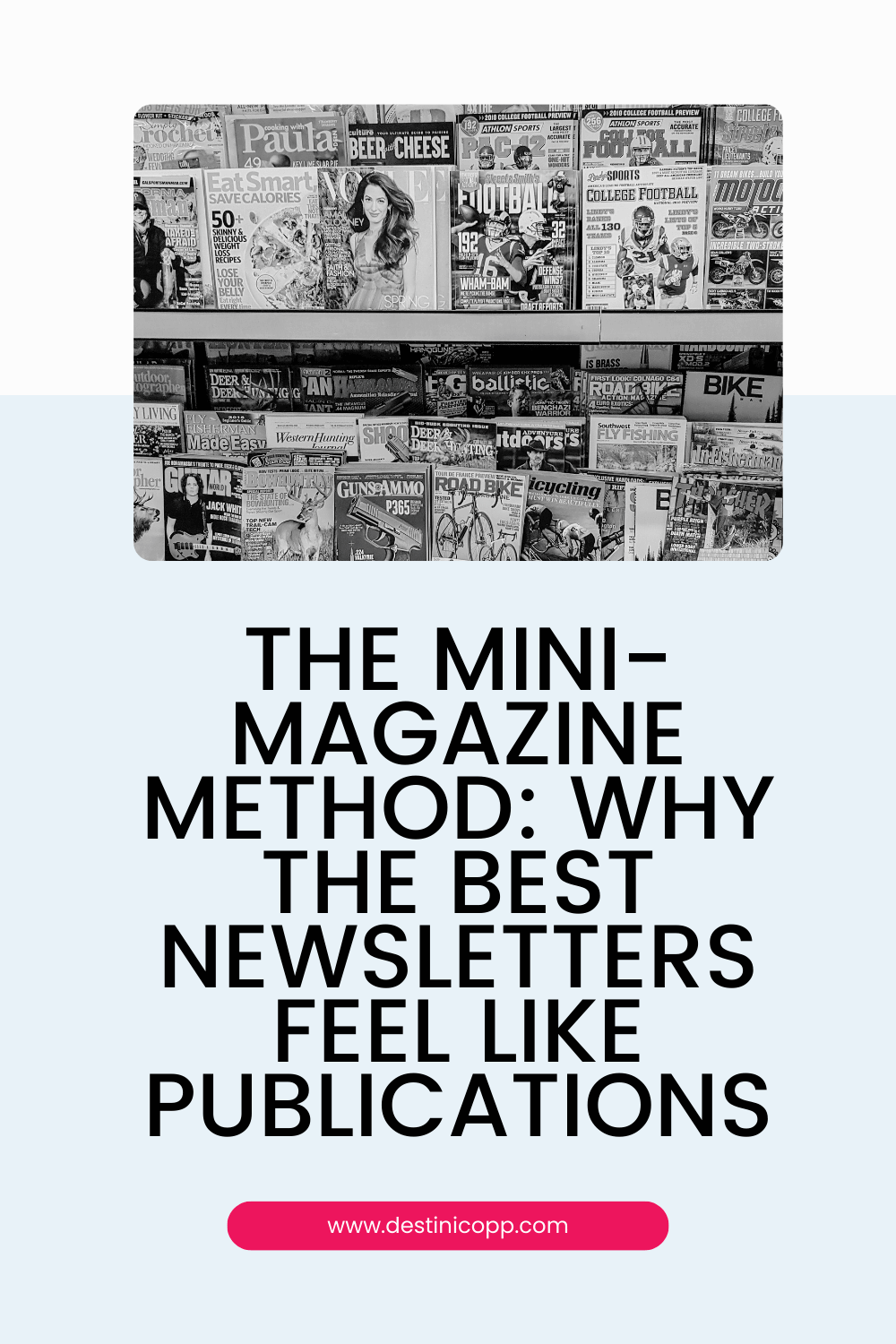
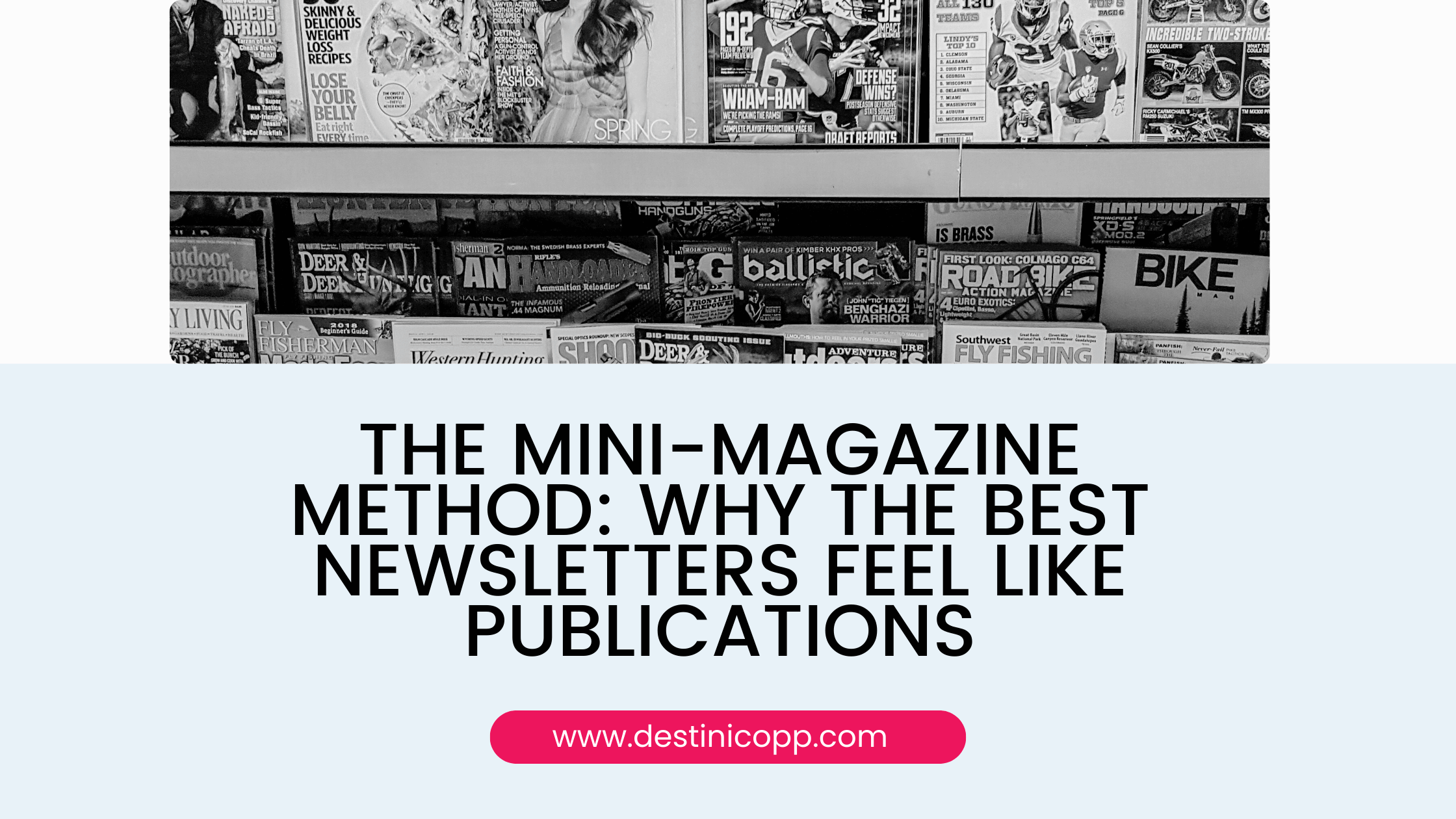
Think about the best magazine you've ever read cover to cover. What made it good wasn't one article. It was the whole experience, and that experience had a shape you could count on. There was a recognizable structure, a mix of quick reads and longer pieces, an editor's voice running through it, a few recommendations you trusted, and ads that fit the world the magazine had built.
The Mini-Magazine Method takes that same idea and shrinks it into an email. Instead of one long piece or a pile of random links, you build a publication with recurring sections your readers start to recognize. And over time that structure does something no single great issue can do on its own. It builds a reading habit.
The Four Things Every Mini-Magazine Newsletter Has
When I look at the newsletters that pull this off, whether they're run by a media company or one person at a kitchen table, they share the same four traits.
A Clear, Recurring Structure
Readers should know what's coming before they open. Named sections like Mindfulness or Nutrition or Health Tech become landmarks, and once someone knows the map, they stop reading top to bottom and start jumping to their favorite part. That sounds like a loss, but it isn't. It means they have a favorite part.
A Distinct Editorial Voice
The short note at the top is what separates a publication from a broadcast. It's a few sentences that remind the reader there's a real person putting this together, and it's usually the most-read part of the whole issue. It doesn't have to be profound. It just has to sound like you.
Variety Inside One Issue
A good issue mixes formats. One longer piece, a couple of quick insights, a curated link or two, maybe a recipe or a short interview, and a closing thought. Different readers engage with different parts, so the mix lifts engagement across the whole list instead of betting everything on one topic landing.
Sponsorships That Fit the Brand
In a structured newsletter, the sponsor spot is a section like any other, so it reads as part of the publication instead of an interruption in the middle of your writing. The rule is fit. If the sponsor is something your reader would have wanted anyway, the ad earns its place.
A Newsletter Doing This Well
At a session during the New Media Summit, a wellness newsletter called All Healthy came up as an example, and it's about as clean a demonstration of this structure as you'll find. The Sunday edition reads almost exactly like a digital magazine.
It opens with a short reflection from the editor. In the issue that was discussed, the editor brought up a line from the film Bridge of Spies, where a character keeps getting asked whether he's worried and answers with a simple question of his own. "Would it help?" That's it. That's the whole opening, and it does more work than a paragraph of positioning ever could, because it doesn't feel like marketing. It feels like the start of something a person made.
From there the issue moves through labeled sections. A mindfulness piece on how to tell whether a meditation practice is actually working. A nutrition piece looking at what the research says about intermittent fasting compared to regular dieting. A health tech section on a new weight-loss drug still working its way through trials. Then a few more sections after that, including a spotlight interview, a recipe, and a closing quote.
Every section is short, scannable, and visually distinct, so a reader can move through it based on what they care about that week. Same as they would with a magazine on a coffee table.
Why This Structure works so well.
There are four reasons this outperforms the one-long-email approach, and they compound on each other.
It builds a habit
Readers stop opening for one link and start opening for the experience. Once someone knows your issue lands Thursday and always has their favorite section in it, you're no longer competing for attention every week. You already have a standing appointment.
It raises engagement across the whole list
Some readers want the deep piece. Others only ever click the quick hits or the tool recommendation. When your issue holds several kinds of content, more of your list finds something worth clicking, and your numbers reflect it.
It creates natural places to make money
This is the part most creators miss. A structured newsletter has slots, and slots are what you monetize. Sponsorships, affiliate recommendations, your own digital products, a membership, an event. Because the newsletter reads like a publication, promotions feel native instead of bolted on, and you're not stopping the content to sell.
It makes the writing easier
Most people quit because they think every issue has to be a perfect long essay. The mini-magazine model kills that pressure. One main insight, two or three curated items, a recommendation, a closing thought, and you're done. You're filling a shape instead of staring at a blank page, and a blank page is the actual reason newsletters die.
Open your last three issues side by side. If a reader couldn't tell which sections repeat across all three, you don't have a format yet, you have three separate emails. Pick the one thing that showed up in all three and name it. That's your first section.
Stop Thinking Like a Writer, start thinking like an editor.
The biggest shift I teach inside Newsletter Profit Club is this. Stop treating your newsletter as an email, and start treating it as a media property.
That one change moves everything downstream. Writers produce content. Editors build a world, decide what gets in, and put it in an order that makes sense for the reader. It's a different job, and it's honestly a lighter one, because an editor doesn't have to generate every word from nothing.
"The creators who build newsletters that last aren't just writers. They're editors. They curate, they structure, and they create a world their readers want to come back to every week."
Dr. Destini CoppAnd publications are worth something in a way that a weekly update isn't. Sponsors pay to be in them. Readers trust them. Products sell inside them without anyone feeling sold to.
How to Apply the Mini-Magazine Method
You don't need a team for this. You need three to five recurring sections and the discipline to keep them.
A starting lineup that works for almost any niche looks like an editorial note at the top, a featured insight, a short block of quick ideas or news, a sponsor or recommendation spot, and a closing thought. Name them in language your readers would use, publish on the same day every week, and then resist the urge to redesign it after two issues.
Consistency is what turns a format into a habit, and habits are slow. Give it a month before you judge it. What you're watching for isn't a spike in opens, it's the moment readers start replying about a specific section by name, because that's the signal they've internalized the format.
The Bigger Opportunity
One more thing from that summit worth repeating. The newsletter space is not saturated. Most people are still subscribed to a handful of newsletters at most, and there's real room for something they'd genuinely look forward to.
But the ones that win from here won't look like email marketing. They'll look like small publications people actually enjoy reading, built by a person with a point of view and a format worth returning to. That's what the Mini-Magazine Method is for.
You don't have a content problem. You have a structure problem.
In about an hour I'll walk you through the three-part structure I found after subscribing to 36 newsletters for six months and logging every way they made money. Sessions run hourly, or you can start watching right now.
Watch the free training →Frequently asked.
What is the Mini-Magazine Method?
The Mini-Magazine Method is a way of structuring a newsletter so it reads like a small publication instead of a single long email. You pick three to five recurring sections, keep them in the same order every issue, and fill them with a mix of content types. Readers learn the format, know what to expect, and build a habit around it.
How many sections should a newsletter have?
Three to five is the sweet spot for most creators. Fewer than three and the issue reads like one long article again. More than five and you're building something you can't sustain every week. Start with three, run them for a month, and add a fourth only when the first three feel easy.
Does a mini-magazine newsletter take longer to write?
It usually takes less time. Writing one perfect long essay every week is the hardest way to publish. When you have named sections, you're filling a known shape instead of starting from a blank page, and several of those sections are short items you can collect during the week.
How do sponsorships work in a mini-magazine newsletter?
The structure gives sponsors a home. When your issue already has labeled sections, a sponsor spot becomes one of them instead of an ad dropped in the middle of your writing. Readers accept it the same way they accept a page in a magazine, as long as the sponsor fits what they already come to you for.
Can the Mini-Magazine Method work with a small email list?
Yes, and it's easier to start small. Structure is what makes a newsletter feel like a publication, not list size. A well-structured newsletter with a few hundred engaged readers can sell products, earn affiliate income, and attract sponsors, because advertisers and buyers care about attention more than raw subscriber counts.

Dr. Destini Copp helps digital product creators build sustainable, systems-based businesses through the Creator Growth Flywheel framework. She's the founder of Creator's MBA and HobbyScool, and has been teaching online business strategy for over a decade. Learn more →