

257: Why Most Advice Doesn’t Work and What You Learn by Watching Decisions Instead

Most business owners aren’t short on information, they’re stuck because they don’t know which direction deserves their full commitment. In this episode, I dive into why watching decisions get made in real time teaches you far more than polished advice ever could.
I’m taking you behind the scenes into how judgment is built, not by copying what worked for someone else, but by observing how trade-offs are made, what gets prioritized, and what’s left on the cutting room floor. If you’ve ever felt overwhelmed by choices or unsure which path to take, this episode will help shift how you think about decision-making in your own business.
What You’ll Learn:
Why advice often loses its value once your business is working
The real problem behind “I don’t know what to do next”
How judgment is built by seeing what almost happened
Why context matters more than copying success
What to pay attention to when watching someone make decisions
Questions to sharpen your own strategic thinking
How to use this lens to evaluate your own trade-offs
If you’re ready to stop searching for the “right” answer and start building trust in your own thinking, hit play on this episode. And don’t forget to grab the free report I mention—it’s the perfect way to practice this decision-making lens.
Mentioned in this episode:
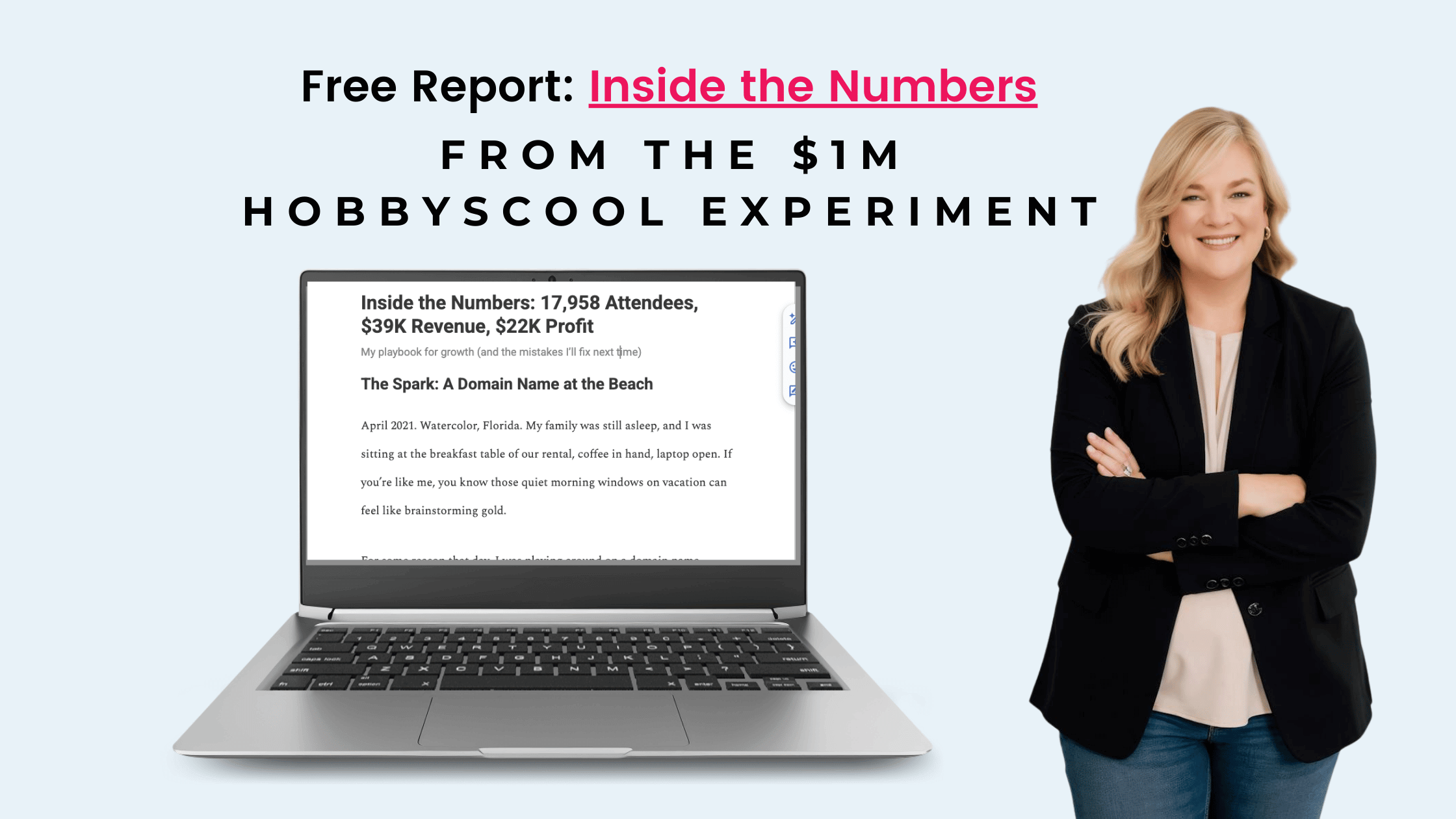
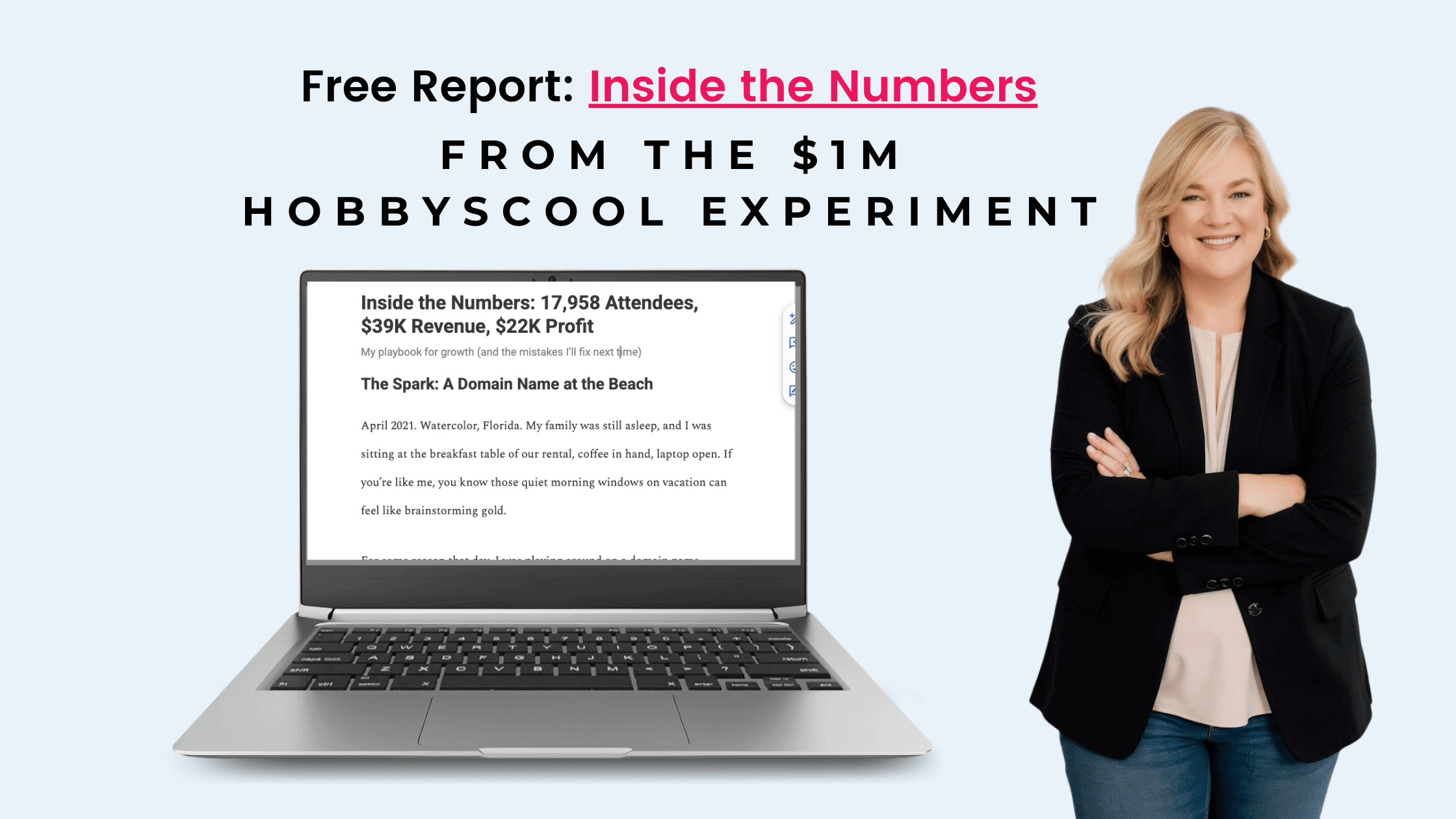
Free Report: The Decisions Behind a 17,958-Attendee Creative Event
Why Most Advice Doesn’t Work—and What to Look for Instead
Most business advice sounds great—until you're the one making the call.
In this post, I want to explore a subtle but powerful shift in how I think about learning and growth in my business. This shift has changed how I filter advice, evaluate strategies, and most importantly, how I make decisions inside HobbyScool.
The Real Problem Isn’t Lack of Information
Most entrepreneurs I work with aren't struggling because they don’t know what to do. They’ve read the books, taken the courses, and sat through the webinars. They’re not information-starved.
What they are struggling with is knowing which path deserves their commitment. That’s a different problem. It’s not about knowledge—it’s about discernment.
Why Advice Falls Short
Advice is incredibly useful when you're just getting started. At that stage, you need to know what's possible and what works. But once your business is off the ground, advice starts to lose its edge. Not because it’s wrong—but because it assumes your context is identical to the person giving it. And let’s be honest: it almost never is.
We all have different systems, audiences, bandwidth, and goals. So when someone says, "This worked for me," what they really mean is, "This worked in my specific situation at that specific moment."
That doesn’t mean the advice is useless. It just means it's incomplete.
Where Real Learning Happens: Watching Decisions
What actually sharpens your strategic thinking is watching people make decisions in real time. That’s where judgment is built.
Outcomes and polished stories tell you what worked. But they leave out all the paths that were considered and rejected, all the trade-offs, and all the things someone chose not to optimize for.
When you watch decisions unfold, you learn how to think. You notice what someone protects, what they’re willing to risk, and where they draw the line. You begin to understand not just what they chose but why.
The Questions That Matter More Than Answers
Once you shift into this mode of learning, the questions you ask yourself change. Instead of:
What should I do?
You start asking:
What am I actually optimizing for here?
What trade-offs am I willing to accept?
What would make this decision feel wrong in six months?
What am I consciously not prioritizing right now?
That shift in mindset is what creates durable confidence in your business.
A Real-World Example: The 17,958-Attendee Event
If you're ready to practice this way of thinking, I highly recommend starting with the free report I put together: The Decisions Behind a 17,958-Attendee Creative Event.
It’s not a step-by-step playbook. It’s a snapshot of strategic decisions and trade-offs made at scale. Don’t read it to copy it—read it to study how those decisions were made. Ask yourself: Would I have made the same calls? Why or why not?
That exercise alone will strengthen your strategic muscles.
Final Thoughts: Build Judgment, Not Dependency
Advice gives you answers. Watching decisions teaches you how to think. If you want to grow as a business owner, the second path is far more powerful.
Over time, this lens will become second nature. You'll stop looking for perfect formulas and start making decisions you can truly stand behind—even when the outcome isn’t guaranteed.
That’s how you build a business you're proud of.
Want to learn more?
Start with the free report. It’s the first documented decision in the HobbyScool experiment, and it’ll give you a taste of what’s coming next. If following along as these decisions compound over time sounds valuable to you, then you’ll understand what this experiment is really about.
Because the truth is: clarity doesn’t come from knowing the outcome, it comes from understanding the choices that led there.
Pin this and save for later

Transcript
[00:00:00]
Welcome to the Creator's MBA podcast—your go-to resource for mastering the art and science of digital product entrepreneurship. My name is Dr. Destini Copp, and I help business owners generate consistent revenue from their digital product business without needing to be glued to their desk, constantly live launching, or worrying about social media algorithms.
I hope you enjoy today’s episode.
[00:00:45]
Hi there—Destini here, and welcome back to the Creator’s MBA podcast. I'm super excited you're spending the next few minutes with me.
In the last episode, I talked about why I’m documenting decisions instead of outcomes as I grow HobbyScool. Today, I want to stay in that same conversation but look at it from a different angle—specifically, why seeing decisions being made in real time actually makes you better at running your own business.
[00:01:18]
This is one of those things that's easy to misunderstand. Most business owners don’t struggle because they’re missing information. They’ve read the books, taken the courses, tried all the frameworks. The problem usually isn’t “I don’t know what to do.” It’s more like: “I don’t know which option actually deserves commitment right now.”
And that is a very different problem to solve.
[00:01:50]
Advice works really well when you’re starting from scratch. At that stage, it’s helpful to know what’s possible and what’s proven. But once your business is already working, advice starts to lose some of its usefulness—not because it’s wrong, but because it assumes the context is the same.
And in a real business, the context is almost never the same. There are different constraints, different audiences, different systems, different trade-offs.
[00:02:30]
So when someone says, “This worked for me,” what they’re really saying is, “This worked in my specific situation, at that specific moment.”
That’s not useless information—it’s just incomplete.
[00:02:50]
What actually helps at that stage isn’t copying tactics—it’s learning how to evaluate decisions. And that’s the part most people never get to see.
You see the outcomes, the numbers, the polished stories about what worked. What you don’t see is what almost happened instead. You don’t see the options that were on the table, what was ruled out, or what someone consciously chose not to optimize for.
And that is where judgment is built.
[00:03:30]
Good decisions aren’t about choosing the “right” thing—they’re about choosing what you’re willing to trade off.
When you watch someone make decisions while they’re still in motion, you start to notice patterns. You see what they protect, what they’re willing to risk, and where they draw the line.
[00:04:00]
And over time, that trains your brain to ask better questions in your own business. Not “What should I do?” but questions like:
What am I actually optimizing for here?
What am I intentionally not prioritizing?
What would make this decision feel wrong six months from now?
[00:04:30]
That’s why seeing decisions unfold is so different from reading advice after the fact. Advice gives you answers. But watching decisions gives you a way of thinking.
[00:04:50]
And that’s also why the free report I mentioned—The Decisions Behind a 17,958-Attendee Creative Event—is designed the way it is. It’s not meant to be followed. It’s meant to be studied.
When you read it, the most useful question isn’t, “Could I do this?”
The question is, “Would I make the same trade-offs?”
[00:05:20]
Would you fund list growth with paid ads instead of relying only on organic traffic?
Would you accept lower margins in one place to protect capacity in another?
Would you prioritize reach over immediate profit—or make the opposite choice?
[00:05:45]
There’s no “right” answer to any of that. But forcing yourself to notice those trade-offs—and think through how you would decide—is what sharpens your judgment.
That’s the value here.
[00:06:00]
Once you get used to looking at decisions this way, you’ll start doing it automatically in your own business.
You’ll stop asking for permission. You’ll stop searching for the “best” answer out there. And you’ll start making choices you can actually stand behind—even when the outcome isn’t guaranteed.
[00:06:30]
If you want to start practicing that way of thinking, I want you to start with that report. Not to copy it. Not to model your business after it. But to pay attention to how the decision was made.
I’ll link to it in the show notes. And if this lens feels useful to you, you’ll understand exactly what I’m doing with the $1 Million HobbyScool Experiment—and why I’ve structured it the way I have.
Thanks for listening.
[00:07:00]
Thanks for listening all the way to the end. If you love the show, I’d appreciate a review on Apple Podcasts or your favorite podcast platform.
Have a great rest of your day—and bye for now.